Revisiting religion in writing

(I’ve spent a lot of time this year writing a bunch of “woe is me” posts about depression, anxiety, and the like. Outside of release announcements and the Summer Reading List Challenge, that’s all PPC has been for months. Sure, 2020 sucks, but…I’m tired of wallowing in the mire. Let’s get back to worldbuilding and theory-crafting. “I do not wish to evade the world, but I will forever build my own.”)

It’s hard to believe that it’s been almost five years since I wrote a post titled Faith and Fantasy. In that post, I talked about how the fundamental assumptions of “generic” fantasy (that it’s a feudal pseudo-medieval Europe, but with magic) are incompatible with the religious framework that authors insist upon. In other words, you can’t have Middle Ages Europe without Christianity. Change the faith of the people, and everything else changes, too.

All of my worldbuilding posts, that one included, come from my personal beliefs about creating a setting in any genre of speculative fiction. I have a “hardcore” worldbuilding mindset, in the vein of Tolkien and Sanderson, and I believe that the benefits of a cohesive setting far surpass the cost of research necessary to create it. I also practice what I preach, as you’ll see.

Recap

To summarize the previous post, the structures of the medieval West stem directly from Christian orthodoxy. Serfdom and the divine right of kings both come from Biblical interpretation. Other religions, if put in the same situation, would create different societies.

We see this in a few historical cases. During the same period, Islam tended to be more autocratic, for instance, without a hierarchy of kings, princes, dukes, counts, and barons. But the changes are even more subtle than that. To take one example: Islamic beliefs prohibit idolatry, which was quickly extended to any depiction of Allah or Muhammed, any engraved lettering on the Koran, and so on. Thus we find the elaborate geometric mosaics in mosques, as opposed to the crucifixes, frescoes, tapestries, and portraits in contemporary Christian houses of worship. Religion influenced art, and this was by no means confined to sacred spaces.

Likewise, the East had, at times, long periods of stability and hegemony. Chinese state religion has always been…hard to pin down, especially for those of us on other continents. Suffice to say, though, that the emperor was believed to have a divine mandate to his rule. (Except those times when he didn’t, which just so happen to coincide with periods of rebellion. But that’s a different post.) But there wasn’t the same faith behind that mandate as Rome had, so you don’t see the same results. The Chinese people didn’t have a belief system based around salvation from sin; while Buddhism, for example, does have recognizable concepts of heaven and hell, it emphasizes actions more than beliefs. Therefore, you don’t see Chinese cathedrals. They don’t go on a pilgrimage to Nanjing or Chengdu. And so on.

Out of this world

Take a fantasy setting, now, and you can see the problems arising. Even the best authors tend to “make something up” for their worlds’ faiths. In some cases, that’s because they’re trying to make a point. The Prince of Nothing series I used as an example in the previous post is intended to evoke the Crusades era, so it almost has to have analogues for Christianity and Islam. A Song of Ice and Fire has a number of religions, from the animist Old Gods of the north to the heptatheistic faith of the majority in Westeros, and their conflict ties into the overall plot.

Others don’t even bother with justification. The stereotypical D&D settings (Greyhawk, Forgotten Realms) are built around polytheism. Gods are active in the world, and they’re really just beings who have a very, very high character level. Okay, but then how did they end up with a social structure that’s so close to the High Middle Ages? Clerics of Mystra aren’t going to be chaste because of the words of Christ. Call 4th Edition non-canonical if you like, but its lore has it that the Raven Queen was a witch who killed the god of death, Nerull, and took his place. If people can aspire to that in this life, they’re not going to be satisfied with a society where the greatest rewards for most will only come in the next one.

Games are games, of course, but some novels also take things that far. Steven Erikson’s Malazan series, for example, follows the RPG tropes. The former emperor ascended to become the new god of shadows. His henchman/fixer, appropriately enough, became the patron of assassins. That happened within the books’ current generation, so there isn’t enough time to show any direct social evolution, but the unnamed world of the series shows a number of similarities to Earth. You have a mercantile empire, an island where the warrior caste is all but worshipped, desert-dwellers fighting a jihad…

Fantasy religions are as varied as their creators, but few authors go to the trouble of truly analyzing the effects their made-up belief systems would have on the societies housing them. I am not always immune to the lure of the cop-out, I’ll admit.

Introspection

Ignoring those novels and shorts set in the “real” world (including paranormal stuff like “Fallen” and the Modern Minds series), my fantasy worlds have religions with varying degrees of depth.

The Hidden Hills books do fall into the polytheistic feudalism trap, I’ll admit. The people of Stada (the primary kingdom of the books) follow about twenty different gods, each overseeing a different segment of life. Despite this, they have a Europe-like system of lords—one of the main characters is the son of a viscount. I justify this in the text by not justifying it at all. That’s the way things are, and nobody really bothers to think otherwise. Speaking as the author, however, I can say that the polytheistic faith derives in-setting from a combination of ancient tribes’ animist beliefs and the guiding principles of an advanced civilization.

That’s much the same as for Otherworld. There, the primary character focus is on the Virissea, descendants of Native Americans (Paleo-Indians, technically) transplanted from Earth at the end of the Ice Age. Going to another planet didn’t entirely disrupt their beliefs—not that we know much about them—but some came to glorify, then outright worship, the creators of the mechanism which took them there. In the present day setting, the Virissea are monotheistic, but they consider those “Altea” to be of a higher level than common human beings. Not quite demigods, but even modern Christianity posits that some people have greater rewards than others. Look at St. Peter, for example.

Otherworld has other races, however. And these are physiologically distinct, far more so than what we consider races. One such people has a kind of spiritual pantheism. Another follows a dualist good-versus-evil faith somewhat similar to Zoroastrianism. A third uses meditation and strict moral codes derived from what they believe to be the rational principles of nature itself. And that’s not counting the distinctions outsiders gloss over or just don’t notice; not all Asians are Buddhists, after all.

My other fantasy setting where religion plays an important role is the unreleased Occupation Trilogy. Here, the crusade is the start of the story. The Hevestine peoples follow the dictates of God’s chosen prophet, who has been slowly deified over the course of nine centuries. They have a central church, a collection of saints who are believed to have performed miracles, and a lot of other Catholic trappings. And their society reflects that, though it’s more of a post-feudal Baroque Europe.

Against them are the Ihneti. They’re…pagan, for lack of a better term. They believe in magic, don’t follow the right teachings, and they’re just all around bad people. Well, they aren’t, but they’re the target of a six-year war and decades-long occupation because, hey, that prophet said to carry the light of God to every corner of the world. And if they would just listen, they’d realize the undeniable truth, and they could be saved, too.

I’m consciously aware of the contrasts in these settings. In a way, they represent three “levels” of worldbuilding. Hidden Hills took the easy way out, as religion isn’t a fundamental part of the plot. The whole point of Otherworld is to explore the interaction of our modern American culture with one alien, but still recognizably human, so the beliefs of the natives are important, but not pivotal. And the Occupation Trilogy is meant to make you think of the Crusades and colonialism, so I emphasized the faith of the believers and how they see their foes as heathen.

Any one of these approaches can work. You don’t have to explore every nuance. There just isn’t enough time, and I know you’d rather write the story. But a little bit of extra thought when you need it, and this aspect of a fantasy society can become so much more real. Five years ago, I stated this as a hypothesis. Now, I can confirm the truth of it.
Parts of the whole

(I’m in the aftermath of a mental breakdown this weekend. Reflection and introspection are the ways I cope, so you get this. Enjoy.)

“Write what you know,” the saying goes. It’s one of the seminal pieces of advice given to budding authors, and there’s a lot of truth in it. Obviously, it’s easier to write situations, characters, and stories that are familiar. More outlandish people and places need more thought, more planning. That’s why you see a lot of authors working on dramas, “slice of life” stories, recollections of childhood, etc. By contrast, fantasy and science fiction, two genres that imply outlandishness by their very nature, are very much niches. They just take more work to create.

Of course, it’s also easy to go too far in the other direction, to create something too familiar. Writing only what you know is great if you’re writing an autobiography, but you have to think outside the box for fiction. After all, the whole point of fiction is that it didn’t happen. And it most certainly didn’t happen to you.

In my works, I try to strike a balance. Obviously, as I write speculative fiction of various sorts, I have to do the research and contemplation of creating a setting unlike our present-day world. That has taken me down some strange and wonderful roads in the past decade, from the settling of the Americas (Otherworld), to paranormal sightings and hybrid DNA (Endless Forms), to the logistics of interstellar travel (Orphans of the Stars), to Biblical scholarship (Heirs of Divinity), to the nature of dreams (Before I Wake). It’s been a fun journey, I have to admit.

In this post, however, I want to talk about the other side: my characters. In particular, I want to look at a certain subset of characters who best illustrate writing what I know.

Birds of a feather

They’re all the same, when you get right down to it. A very common theme in my works is…well, me. Not as a self-insert or Mary Sue, but a character who embodies a part of me. I’ve written before how the main POV characters of the Otherworld series are all different facets of me, and that’s true to an extent. But there’s a broader correspondence, too.

Many, though not all, of the stories I write will, at some point, feature a character who represents how I see myself: an intelligent, luckless, socially awkward or rejected, insecure male. I’ll freely admit that I sometimes dwell on those characters, giving them more screen time and deeper subplots. That’s because I’m writing what I know. I can get in their heads better, because they’re closer to who I am. Many of them also end up with “good” endings, and you can call that wish fulfillment if you like.

In contrast to these self-portraits, I’ll often have a character who is, in essence, the man I wish I could be. This character is still highly intelligent (I’m not good at writing below-average individuals), but he’s not necessarily a genius. Despite that, he has the confidence I lack, and he’s often in much better shape physically, socially, or financially. He also gets plenty of time as the center of attention, and he often has conflicts with the other sort of self-insert, but they’re often of the “friendly rivalry” sort.

With that in mind, I’m going to go through some of my works, whether novels, novellas, short stories, or the major series so dear to my heart. For my own peace of mind, you see.

Otherworld

Otherworld is where I first noticed this tendency. As it’s by far my largest series, that makes a lot of sense. Alex has been one of the central characters since the beginning, and he’s probably the most transparently like myself. He’s your stereotypical geek, caught in a bad situation due to what he believes is his own bad luck and poor choices. (About the only place where we disagree is that he’s into anime and manga.)

Over the many, many stories of the Otherworld series, Alex certainly grows the most of any character. He already suffered from some depression issues even before he and his team were accidentally sucked into another world, but the rigors of living there didn’t help at all. He wasn’t used to physical exertion, he didn’t think he could learn another language, and he knew he was a poorer fit for the strange land of Vistaan than he was even in America. Witnessing the death of a native friend broke him, as he would tell you. At least he knows what caused it. Some of us aren’t so lucky.

Alex’s rival, of a sort, is Jeff. He’s still the nerdy type, and he’s far from outspoken, but he knows his role, and he excels at it. Jeff is the linguist of the group, and only really part of that group because they needed more interpreters. Going to another planet scares him as much as anyone else, yet he manages to keep it together.

These two grow close as time goes on, as they see themselves as similar enough that they could be friends. But their fates diverge. Jeff is seduced by a native woman; Alex assumes none of them would give him the time of day, the same as their counterparts here. Alex’s best claims to fame out there are determining their latitude and becoming a math tutor, while Jeff works on decoding the language of the ancient race who may have built the device that brought them there in the first place. In every case, you see the dichotomy: Jeff has humility, but Alex has self-loathing. Who I want to be, who I believe I am.

Hidden Hills

The Hidden Hills series is a little like Otherworld. Despite only being two books so far, and four total, there’s a lot of character development packed into those 1300 pages. And I made the same character decisions, just transplanting them into the pseudo-fantasy setting.

For these novels, we have Asho and Gallan. One is a tradesman, working as an apprentice smith under his father. The other is a junior scholar. Both are well aware of their corresponding places in the feudal-era society they inhabit, but they take those places much differently.

Gallan can comport himself well. He can talk to the nobility. He can do research. He knows how to manage, delegate, and lead. In the underground lair of the so-called wizards, he becomes the man in charge even before he becomes a man. Asho, meanwhile, never feels right. He doubts himself when it comes to building the machines of the wizards. He sometimes feels that even his little sister, only eight years old at the start of the first book, is more useful in the circle that he and his friends have created. And he’s scared to death when his mother works out an arranged marriage on his behalf.

These two aren’t the perfect metaphor that Otherworld provides, but they stick out to me. I’ve written two characters, one of whom is everything I want: a leader, a scholar, an inventor. The other? He doesn’t know what he wants to be, but he’ll be happy if he just doesn’t disappoint anybody.

Orphans of the Stars

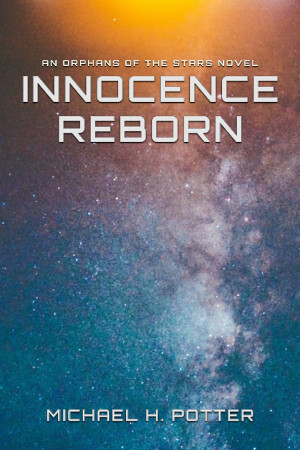
My newest release, Innocence Reborn, doesn’t offer quite the same set of characters. I consciously tried to avoid the trap I’m describing here. Still, Levi is very much an idealized version of myself. He has the take-charge attitude I long for, though he also suffers from bouts of indecision and doubt.

Probably the closest to my self-image is Mika. Odd, as I don’t connect with my female characters to the same extent, but she shares a few of my demons. By the fourth book (which I’m currently writing), she’s deep in depression, and already past the breaking point. Not great for a fifteen-year-old girl. Not great for the 36-year-old man who first imagined her, either.

It’s harder to see, but this introspection has let me realize the similarities, and how I’ve been unconsciously steering Mika into more of a catharsis role as the series has progressed. Now that I know, I’m not sure what that will mean for her character development, but time will tell.

All the rest

My other works don’t possess the contrast, but one trope or the other almost always appears. I’ll treat the rest of the set together here, just for interests of space.

  • The Linear Cycle, being an apocalyptic fantasy, doesn’t have much time for doubters. Everyone has to work together to fight back the horde and keep society from falling apart. Still, Tod has a lot of the same qualities as, say, Alex. He’s a social outcast for a different reason, one specific to the setting, but it leaves him in much the same predicament.

  • Before I Wake‘s protagonist Jay fits the “insecure and inward” mold to some extent. As I wrote this novel following some deeply personal tragedy, I can only chalk that up to self-insertion. I wasn’t in the frame of mind to write very original characters, and the plot was, to me, more important.

  • In Nocturne, Shade is very much an authorial voice, at least in terms of his philosophy. As a person, he may represent some part of me, probably the part that feels like I’ve been rejected by society. Other than that, he’s like me only in his drive and his love for his ideals. But that’s still a lot.

  • Fallen, my free novella, follows Lucas, a tech who’s just been fired, who knows he’s a pariah because of his lack of faith. Well, that’s just me in a nutshell. (Okay, except the “getting fired” part. You have to get hired first.) You’ll get no argument from me there—it was mostly intentional. And Fallen might be the closest thing I’ve written to a personal fantasy. Meeting a perfect, indeed angelic, woman and falling in love with her? In late 2017, I would’ve killed for that. In 2020, I can say I got what I wanted. Next time I write a fantasy that’s going to come true, I’ll make sure it has a longer ending.

Most of the others are longer stretches. You could make a case that Dirk from Modern Minds fits the “how I see myself” mold in some fashion. You could also say the same for Luis from Heirs of Divinity…if I ever put that one out. And the Occupation trilogy almost pulls off the twofer. Main character Raneph is a Shade-like idealist and revolutionary, while humble helper Anit just wants to learn all he can without rocking the boat. (Or getting magically bound to the bed by his lover, but that’s another post.)

This has been a long post, and I’m trying hard not to make it even longer. But I needed to write it, whether anyone ever reads it or not. And if you’ve ever wondered why some of my characters are the way they are, this is my reasoning. They’re me. In some form, they’re always me. Because that’s what I know.

Release: Innocence Reborn (Orphans of the Stars 1)

The time has finally come. Innocence Reborn, the first novel in my Orphans of the Stars YA space adventure series, is now available on Amazon KDP and in paperback!

Space is a frontier. Space is an adventure.

Levi Maclin was always interested in the vastness of space. He dreamed of sailing through the void, exploring new worlds, seeing alien suns. This summer, he hoped to have his chance. Instead of going to beach for their vacation, his family would travel across light-years to Outland Resort, humanity’s most distant colony, its farthest frontier. It was a getaway, an adventure, a dream come true…until it wasn’t.

Some vacations are ruined by hurricanes, others by blizzards, but Levi’s falls apart when a series of unidentified objects streak across the sky above Outland Resort. They aren’t meteors. They aren’t comets. They’re weapons, weapons trained on the resort and its whole world. Suddenly, his adventure takes an unexpected turn. As concern turns to panic, he can only think one thought: how did it all go so wrong?

Told through the eyes of Levi, his brother, and a number of other children and teens they meet along the way, this series is my attempt at making space acessible and fun in a way rarely seen today. Readers of all ages will find something to like about this one, I believe. The characters are young, thrust into an unpredictable and volatile situation that requires them to grow up fast, but they retain their youthful vigor and mindset throughout. While the science isn’t 100% rigorous (there’s FTL travel, for example), it’s far more than mere handwaving. There’s action, drama, adversity and triumph.

And there’s space. Lots and lots of it. Orphans of the Stars has space travel. It has ships, colonies, asteroid mining, domed cities, pirates, combat, and much, much more. Check it out on my Patreon in the Casual Reader tier or on Amazon for $3.99 (Kindle) / $11.99 (paperback), and remember to keep reading!

Moving on

Late yesterday evening, I left the Fediverse instance (the technical term for the individual servers making up this federated social network) I had inhabited for over a year, letsalllovela.in, following a warning by the administrator. Quite simply, I was told that my opinions were not permitted to be stated on her site, that I should, and I quote, “find another instance” for them. So I did. Now that the heat of the moment has cooled, I feel the need to write this.

I joined the instance last May for two reasons. One, my original introduction to the Fediverse, toot.love, was small, isolated, and actually blocked by many of the larger sites. I wanted to connect with a larger audience, because what’s the point of a social network if your voice can’t be heard? And two, I wished to try out Pleroma, the 2nd most popular software platform on the network after Mastodon. There weren’t a lot of good Pleroma-based instances at the time, and some had…less than stellar reputations. Those few I found which had open registrations and sensible terms of service usually had some other flaw I found fatal. Only 3 real people posting, with the rest being all bots. Too much anime influence. An annoying pink theme.

letsalllovela.in got recommendations because it was a “comfy” server. Quite a few active posters, good connections to the rest of the network, accessible admins, and it just gave off a chill vibe. I would’ve liked a more tech-themed site, yes, but I had fun interacting with the people there, as well as those who had been walled off from me initially.

There were some bumps in the road. The admins, both teens from…somewhere in Europe, were obviously still learning how to run a server. Downtime has been frequent, sometimes lasting 12 hours or more. The site nearly caused a relationship disaster when one admin (the same one who warned me, as I’ll get to in a minute) changed the site’s name to “Sapiosexual Pride” on the very day my partner—who identified with the term—first checked it out. That required a lot of explaining, and the domain name (using the India TLD) has remained a running joke between us ever since.

Both admins have said they are transgender. That doesn’t bother me. It’s not my cup of tea, but I’m not offended at the thought. And they could even have fun with it on occasion, joining in the more good-natured ribbing that friends can share about such personal details. So I came to believe that they were decent people, open and accepting.

Like so much else in the past week and a half, that opinion has had to change. The post that caused this was a reply to someone I’ve conversed with on a few occasions. We don’t see eye to eye on everything, but then nobody really does. In this case, he posted that, because the phrase “All Lives Matter” has become seen as racially charged, he wanted to suggest “People Lives Matter” instead, complete with its own Twitter-style hashtag. I honestly responded, saying that I had been thinking of “Human Lives Matter” in private.

That’s important to me. Human lives do matter. All of them. Black, white, or whatever, if you value human life, I believe you must value all human life equally, at least a priori. And while I do sympathize with victims of racism and other forms of discrimination, I can’t, in good conscience, support a movement that rejects this fundamental premise. By saying that some lives matter to the exclusion of others, I feel you have committed the same transgression you attribute to your opponents.

In addition, I can’t support the present rioting throughout the country. Peaceful demonstration is one thing; being enumerated in the First Amendment, it’s the next best thing to a sacred right, as far as I’m concerned. Looting, vandalizing, arson, and the other attacks being committed in the name of George Floyd, by contrast, seem to me destruction for destruction’s sake. Whatever nebulous goal these more violent demonstrations want, that’s not the way to achieve it.

But this isn’t good enough, apparently. Too often, people on both sides of the political spectrum have resorted to the “you’re either with us or against us” argument, the false dichotomy that has divided our nation for 19 years and counting. And I was the victim of that last night. The letsalllovela.in admin told me that my post was unacceptable, that even mentioning “All Lives Matter” instead of the politically-correct movement was harmful.

How? How is equality harmful, unless your objective is to sow discord? How is giving everyone value equivalent to taking it away from the segment currently in the media spotlight? Last I checked, the whole point of the civil rights movement was that skin color shouldn’t matter.

No, our world isn’t perfect. It can’t be, but that should never stop us from trying to make it better. And while the Fourteenth Amendment guarantees equal protection under the law, those who enforce that law too often ignore it. That’s terrible every time it happens, no matter who the target is. What happened in Minnesota is a tragedy by any account, yet America has survived worse in the past. The ideals we hold dear, that all of us are endowed with liberty simply by being born, don’t change because we’re black or white. They stay the same for men and women. They care nothing for our religion, our sexuality, our nationality. Liberty and justice for all. It can’t be put any plainer than that.

Life is too short to waste on some battles, so I moved. I went to a place where such an opinion can be voiced without censorship. It was a mostly cordial separation. I exaggerated for dramatic effect in the introduction post for my new Fediverse home, which kicked off a rather long thread that got a bit heated. But I have no hard feelings. I disagree with the decision, yes. However, I do not deny the admin’s authority to make it in this case. And while I disagree with the politics behind it, I understand that tensions are running high these days. Some people would like nothing more than to cut off all contact with those who think differently on any issue.

That way lies destruction. We would become the house divided against itself, as Lincoln once said, and we would fall. Democracy requires debate. Civil discourse, not partisan bickering, will heal the wounds our society has suffered. I thought I had found a place where that sort of disagreement was welcome. I was wrong.

You live and learn.

Go for launch

Today, SpaceX launched its Demo-2 mission, the first manned mission leaving from US soil since 2011, and our first capsule launch since 1975. If all goes well, the Dragon will dock with the ISS tomorrow morning, then spend the summer there before a splashdown in September. In this post, I’d like to talk about my feelings and opinions about this historic moment and what I think it means for all of us.

As you may have guessed from reading my posts here and elsewhere, as well as my books, I am a space nut. I don’t deny it. Space has captivated me since I was a child, when I would read books about the Apollo missions, encyclopedia articles about the solar system and the planets. Cartoons involving space, most of them made in the early ’60s (before we had ventured beyond Earth orbit), captivated me. TV and movies mostly meant Star Trek, Star Wars, and eventually the Stargate franchise, as well as the far more realistic Apollo 13—still one of my favorite movies—and even Space Camp.

Since those days, I’ve expanded my repertoire. I’ve read Andrew Chaikin’s A Man on the Moon, the go-to account of the Apollo program and its precursors, at least a dozen times. I eagerly watched its TV version, From the Earth to the Moon, a few years before that, and my eyes were glued to the screen for 2007’s When We Left Earth. Add in the other historical accounts, the futurists’ ideas, the rocketry textbooks, and even games like Kerbal Space Program, and you get the picture. Space will always grab my attention.

But the real-life space program is often depressing. NASA is, in certain circles, a running joke. “Boldly going nowhere since 1972” is a faux slogan I’ve seen and spread in reference to what was, in my teenage years, the only government program I truly supported. The Russians aren’t really any better; they at least have the excuse of communism and its aftermath. The Chinese are too secretive and suspicious, and no one else is even bothering with manned spaceflight.

I thought the X-Prize would change that. I watched the Scaled Composites flights with stars in my eyes, believing this would finally be the dawn of a new Space Age. Because the first one was, in my opinion, one of the three most pivotal periods in modern human history—the others being the Enlightenment and Industrial Revolution, in case you were wondering. The heady days of 1957-72 directly begat the Information Age of 1992-2016, as well as our present time, which I feel is better labeled a Misinformation Age. A new space race, even one driven mostly by capitalistic concerns of profit and shareholder value, will bring a new technological revolution. There’s no doubt in my mind. And the benefits will be felt far beyond the space-loving community. Apollo made computers popular. What will the first mission to Mars give us?

In 2004, it looked like that was coming true in real time. SpaceShipOne was reaching the Karman Line, the boundary between our world and the vast void beyond, and pocketing a few million dollars in the process. Richard Branson was hyping trips around the moon. Robert Bigelow had inflatable space stations and lunar colony modules on the drawing board. Elon Musk, Peter Diamandis, Jeff Bezos, John Carmack…entrepreneurs were getting in the game, and so were tech giants. Google announced a prize for an unmanned lunar lander (nobody won it, alas), and one of the team leaders even shared my name. The dream was alive.

And then it wasn’t.

The Great Recession was a setback for space as much as any other sector. Launch dates began to slip faster than the stock market. SpaceX had a few bad accidents, plus a lot of red tape. Even the government stuff was going badly: important science missions like SIM and TPF were scrapped, Kepler barely got off the ground, and we still don’t have that Europa lander. The Obama administration didn’t help matters, as they prioritized earth science and political causes such as global warming and diversity over the core mission of NASA.

In 2008, I looked back on the Bush presidency with an opinion that has remained unchanged over the past twelve years: the Vision for Space Exploration was the only truly good thing he did. That was killed early in Obama’s first term—he campaigned on it!—and replaced with…nothing. Seriously. Rather than reach for the stars, our previous president was content to go in circles. There’s a metaphor there. I think it’s pretty obvious.

The final Shuttle launch was a sad time for me, a dark time. Sure, I’ve had much darker moments since, but that day felt like…well, like I was watching a friend die, and I could do nothing to stop it. It was a day that a childhood dream was finally, fatally crushed. Astronauts were going nowhere, and now they couldn’t even do that without hitching a ride from our former enemies!

In the years since, I had to get my space fix wherever I could find it. I went back to reading science fiction, which I had avoided for years because of the sheer despair it caused when I thought about how far away we are from doing anything like what I was reading. Eventually, reading became writing, a process that culminates with the imminent release of Innocence Reborn, my first novel set in space.

But I keep following SpaceX. They’re the only ones left from those wonderful early days of the commercial space race, and they’re actually doing something. Elon Musk has grand plans, along with both the will and the means to pull them off. Whether his team can, I don’t know, but I’m hoping.

We need space. Space is our future, in both the literal and the metaphorical senses. Moon missions, Mars missions, asteroid mining, and space hotels all offer something to humanity as a whole. We gain scientific knowledge from exploring new places, material resources from the untapped riches awaiting us, and an important intangible: something to strive for.

Every night, we can look up and see infinity. Pinpricks of light impossibly far away, for the most part. But some of the things in the sky are much closer. They’re within our grasp, but only if we want to reach. Today should long be remembered as the day America finally started to stretch out its hand again.

Release: Secrets Uncovered (Tales of Two Worlds 3)

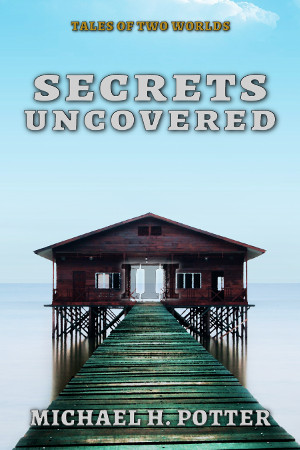
Here we reach the halfway point of this newest bridge to the Otherworld. Tales of Two Worlds continues today with “Secrets Uncovered”:

Some things never change, and Jeff believes he has found many of those in the other world. And he has also found archaeological evidence from the most ancient days, tantalizing clues to the mysteries he has longed to solve for over a year. As a professor at an alien university, his responsibilities stand in the way of devoting himself fully to research, but he knows he needs something to show when his friends from home arrive for the third time.

I’ll admit that this one is more “slice of life” than my usual writings, but sometimes you have to take a break, right?

This tale, like the previous two dozen in the Otherworld series, can be found on my Patreon, where you can get the whole set by pledging only 3 dollars. That’s not even a Memorial Day deal—it’s always that cheap!

For the second half of 2020, I’ll be releasing the second half of this series. Next on the list is “A Life Complete”, coming in July. See you then, and remember to keep reading!

Summer Reading List 2020

Once again, Memorial Day is upon us. Although the world has been turned upside down in the past few months, some places are beginning to return to normal. Slowly but surely, cooler heads are prevailing. And one way to speed the process of recovery is to get back into your routine.

Thus, here at the unofficial start of summer, it’s time once again to start the Summer Reading List Challenge! This will be the 5th year I’ve done this particular self-imposed challenge, and I’ve refined the rules over time, polishing them into something simple yet daunting.

The rules aren’t so much rules as recommendations. Guidelines, except that that has become a loaded term lately.

  1. The goal is to read 3 new books between Memorial Day (May 25) and Labor Day (September 7) in the US, the traditional “unofficial” bounds of summer. (Anyone in the Southern Hemisphere reading this: yes, you get a winter reading list.)

  2. A book is anything non-periodical, so no comics, graphic novels, or manga. Anything else works. If you’re not sure, just use common sense. What’s important is that you’re honest with yourself.

  3. One of the books should be of a genre you don’t normally read. For example, I’m big on fantasy and sci-fi, so I might read a romance, or a thriller, or something like that. Nonfiction, by the way, also works as a “new” genre, unless you do read it all the time.

  4. You can’t count books you wrote, because they obviously wouldn’t be new to you. (Yes, this rule exists solely to keep me from just rereading my books.)

That’s it. You have over three months. I’ll be posting my progress here at Prose Poetry Code, as well as on the fediverse at mikey@letsalllovela.in when that server actually works.

Have fun, enjoy the summer, and keep reading!

A difficult decision

Sometimes, you have to make a judgment call, and it may not be the one you wanted to make.

In my two months of writing hiatus, I contemplated many things, some of which I have discussed in recent posts. In the past week and a half, however, I’ve come out of my personal lockdown to rediscover my favorite hobby. But this disruption to our world has caused me one other problem I didn’t anticipate when The Powers That Be closed everything for what we now know to be something no worse than a bad flu.

As I have said before, a number of my books and shorter works are set in a shared universe. This collective setting, which I sometimes call the “Paraverse” in my mind, now encompasses my extensive Otherworld series, the Endless Forms paranormal thriller series, the Modern Minds short story collection, the RPG knockoff The Soulstone Sorcerer, my historical fantasy novel Heirs of Divinity, possibly my free semi-romance novella Fallen, and a couple of odds and ends I rarely talk about.

These all take place in the same setting, the same world. It’s a world essentially the same as ours, except that there are differences at the margins. So monsters like those in The Shape of Things exist, but they’re so rare that almost nobody believes in them. There’s a portal to another planet hidden deep in the Mexican forests, but it only works one day out of the year (okay, two, but spoiler alert), and it’s almost impossible to find anyway. A secret society dedicated to psionic phenomena existed back in the Roaring Twenties, but the Great Depression basically ended it. And so on.

The link between all of these is Project Daylight, a dark web forum dedicated to exposing the “truth” behind all the weirdness in the world. They’re not always right—some of them believe the moon landings were faked, a point of view I find so offensive I can’t even write about it in detail—but they occasionally knock it out of the park. For the most part, though, they’re the crazy nutter types you’d see associated with Alex Jones, Gab, QAnon, and other internet nastiness.

The members of Project Daylight didn’t exist when I first started Otherworld. That only came about much later, when I needed a reason for the kids who had visited another planet to be found out. Since then, I’ve made them a larger part of that series, even giving the forum’s administrator his own story: “Alone With Myself”. Another member appears in Change of Heart, the latest Endless Forms novel; this one, named Shane (but going by the moniker Lurker), is based on my neighbor, who really does believe some crazy things.

Now, the more historical entries in the Paraverse obviously don’t have a group that formed in 2016, and there’s no evidence the forum even knows about the secret 18th-century college in London claiming descent from Simon Magus through a “lost” book of the Bible actually written around 800 AD. (Yes, in case you’re wondering, that is part of the plot for Heirs of Divinity.) Likewise, they weren’t around to see the foundation or fall of Matrema in the late 1920s and early 1930s.

But they’re around now, and therein lies the problem. See, I had already written multiple stories set in 2020 before this year went off the rails. The Beast Within and Change of Heart both take place right about now. “The Candle’s Flame” finished up just as the Wuhan virus was making its alleged debut in the US (although we now see it was here as early as November, a few weeks before I caught it!), and its immediate successor, The Second Crossing, starts right about now. None of them mention a global pandemic, a panic-induced lockdown, or anything of the sort. Which really breaks the idea that these books are set in our world.

But I think I’ve found a way to save face.

Bear with me here. The problem is that no one could have foreseen our present crisis. If I had written it into a story, even I would have dismissed it as too outlandish. Too unrealistic, and I value realism in my stories. On the other hand, it seems wrong not to mention the coronavirus in some way going forward, seeing as how it defines the current generation the same way 9/11 defined the last. (Take that as you will. It’s an entirely different debate.)

My solution is simple: yes, the virus does exist in the Paraverse. But it was less virulent, less widespread, and less deadly. Thus, it was more in line with what we actually see, rather than what we were originally told. The media reaction in the US was closer to what we saw with SARS way back when. Oh, it was talked about in the news in February and March, but as a problem almost exclusively tied to Asia. Project Daylight found some information about…certain actors trying to hype it as something more dangerous, but that narrative fizzled before it had a chance to affect us too badly.

In this, I recognize that I’m effectively rewriting history to suit not only the best needs of the story, but also my personal beliefs. And that’s okay. I have no problem with it. The Paraverse diverged from our world long ago. I just want to keep it close enough that we can imagine, that we can look at it and wonder how much of it really is happening right under our noses.

Forever in me

I am a humanist.

Different people interpret that term in different ways. For me, it means something pretty simple: my primary focus is on humanity. Not the spiritual, not the metaphysical, and not the environmental, except insofar as it pertains to human habitation.

I consider myself agnostic as it pertains to the question of God. I just don’t know, and I’m not afraid to admit it. I don’t have faith, though. I can’t. Nothing I’ve seen in my 36 years of life has shown me any proof of a cosmic force of pure good, because there’s only one purely good thing in my life, and I know I’ll lose her once I inevitably fail in my attempts at becoming something better.

That’s a terrible thing by any measure. But it’s worse for someone like me. Part of my personal humanist feelings is a sense of purpose. Rather, the overall lack of purpose I feel in my life. Unlike believers, I can’t take it as a given that I was born with some kind of destiny or fate, or even a curse, despite sometimes feeling like I’ve been laboring under one of those for decades.

No, purpose is, for me, what you make of it. And that’s where my beliefs combine with my situation to create a perfect storm of despair. As humans—as living beings—we’re born with only one innate purpose: reproduction. To procreate is to fulfill our evolutionary goal, our biological imperative. That transcends any religion, and I would feel the same if I were an adherent of one. “Be fruitful and multiply” is the way it’s commonly worded by Christians; I do agree with the sentiment, if not the source.

I want children. I need to be a father. I have felt this way for years. Maybe that stems from my life history, the way my own father abandoned me when I was 12. Whatever the case, it’s not an urge I can stifle. Because, in my mind, if I don’t help create the next generation, I’ve failed at life in a way that no amount of fame or wealth (if I had either) could overcome.

Therein lies the problem. I’m 36, and I know my time as a virile male is limited. My partner is the same age, and she’s worried we’ll run out of time, too. I’m essentially unemployed, with 20 months and counting of rejections. The only reason my bank account has a balance over a hundred dollars is because I haven’t spent my stimulus check. I have goals in mind, yet no conceivable way to achieve them. And I know I’m not getting any help. If I’m going to improve myself, it’ll have to be on my own.

It is the cruelest joke that so many people in this world have and squander both the stability and the legacy that I long for, that I feel I’ve earned, while those like me must struggle for every scrap, constantly beaten back down when we dare to lift ourselves out of the mire. Religious folk would say that this world’s suffering is nothing in comparison to the next life’s reward. To them I would say this: why can’t we have rewards now, too?

I don’t ask for much. Just what the average American man gets almost as an afterthought. I don’t have to be a billionaire. I don’t need 7 kids who all end up as Olympic athletes, Oscar-winning actors, or legendary pop stars. I would consider myself content with a nice suburban home, a son and daughter with the wife I adore, and a career that challenges my mind while putting food on the table. I’d be happy with a normal life like that.

I only wish I could have the chance.

The price of protest

Tin soldiers and Nixon coming…four dead in Ohio

I have written a lot in the past few years to commemorate the 50th anniversary of various spaceflight milestones: the Apollo 8 lunar orbit, Apollo 11’s landing in 1969, and so on. I do that because I love the American space program, of course, but also because I believe its accomplishments rank among the greatest in human history. They are certainly shining lights in the 20th century.

But we must also remember the darker days, lest, to paraphrase Santayana, we be doomed to repeat their mistakes.

This day 50 years ago, on May 4, 1970, four students at Kent State University were shot and killed by National Guard soldiers during a protest against the Vietnam War. Nine others were injured, a college campus became a battlefield, and the entire nation lost whatever vestiges of innocence it still had after years of needless death in the jungles of Southeast Asia.

I was not alive for these events. They were 13 years before I was born; those who lost their lives were over a decade older than my parents! Yet I have seen the documentaries. I’ve read the stories. That is how history survives, through the telling and retelling of events beyond our own experience. In the modern era, we have photographs, television recordings, and other resources beyond mere—and fallible—human memory.

For Kent State, I’ve watched the videos from the tragedy itself, and few things have ever left me more disgusted, more saddened, and more…angry. It boggles my mind how anyone, even soldiers trained in the art of war and encouraged to look at their enemy as less than human, could think this was a good thing, a just thing. Yet they did not hold their fire. If they stopped to think, “These are young Americans, people just like me, and they’re doing what’s right,” then it never showed in their actions.

Worse, however, is the public perception that followed. In the wake of the massacre, polls showed that a vast majority of people in this country supported the soldiers. Yes. About two-thirds of those surveyed said they felt it was justified to use lethal force against peaceful protestors who were defending themselves.

Let’s break that down, shall we? First, protests are a right. The “right of the people peaceably to assemble” is guaranteed in the First Amendment; it doesn’t get the attention of speech, religion, and the press, but it’s right there alongside them. And remember that the Bill of Rights, as I’ve repeatedly stated in my writings, is not a list of those rights the government has granted its citizenry. Rather, it’s an incomplete enumeration of rights we are born with—“endowed by our Creator”, in Jefferson’s terms—that cannot be taken away by a government without resorting to tyranny.

Some may argue that the Kent State protests were not peaceful. After all, the iconic video is of a student throwing a canister of tear gas at the police officers called in to maintain order, right? But that argument falls flat when you see that the tear gas came from those same cops. It was fired to disperse the crowd. The protestors didn’t like that, so they risked physical danger (not only the chance of getting shot, but even just burns from the canisters themselves) to clear the space they had claimed as their own.

And finally, the notion that killing students was the only way to end the protest would be laughable if it weren’t so sad. They were unarmed. Deescalation should always be the first option. Whatever you think about the protest itself, whether you feel it was wholly justified or dangerously un-American, you cannot convince me that shooting live rounds into a crowd is an acceptable answer. The only way, in my opinion, you could convince yourself is if you accept the premise that these students were enemy collaborators, and the National Guard’s response was legitimate under the rules of engagement.

But that presumes a dangerous proposition: that American citizens opposing a government action they feel is morally wrong constitutes a threat to the nation. And here we see that those lessons learned in Kent State 50 years ago have been forgotten since.


Today, we don’t have the Vietnam War looming over us. The eternal morass of Iraq and Afghanistan, despite taking twice as much time (and counting), has long since lost the furious reactions it once inspired. Trump’s presidency was worth a few marches, the Occupy and Tea Party movements were quashed or commandeered, and even the Great Recession didn’t prompt much in the way of social unrest.

But a virus did.

Rather, the government response to the Wuhan virus, whether on the federal, state, or local level, has, in some places, been enough to motivate protests. The draconian lockdown orders in Michigan, California, North Carolina, and elsewhere, unfounded in science and blatantly unconstitutional, have lit a fire in those most at risk from the continued economic and social devastation. Thousands marching, cars causing gridlock for miles, and beaches flooded with people who don’t want to hurt anyone, but just yearn to breathe free. It’s a stirring sight, a true show of patriotism and bravery.

Yet too many people see it as something else. They believe the protests dangerous. The governors know what’s best for us, they argue. They have experts backing them up. Stay at home, they say. It’s safe there. Never mind that it isn’t. As we now know through numerous scientific studies, the Wuhan virus spreads most easily in isolated environments and close quarters. It’s most deadly for the elderly, and some two out of every three deaths (even overcounting per federal guidelines) come from nursing homes and similar places. For the vast majority of people under the age of 60, it is, as the CDC stated on May 1, barely more of a risk than “a recent severe flu season” such as 2017-18. Compared to earlier pandemic flu seasons (e.g., 1957, 1969), it’s not that bad, especially to children.

Of course, people of all sorts are dying from it. That much is true, and my heart cries out for every last one of them. Stopping our lives, ending our livelihoods, is not the answer. People, otherwise healthy people who aren’t senior citizens, die from the flu every year. My cousin did in 2014, and he was 35. That’s the main reason I feared for my life when I was sick back in December; looking back, the symptoms my brother and I showed match better with the Wuhan virus than with the flu, and each week brings new evidence pointing to the conclusion that it was in the US far earlier than we were told. If that is what we had, it didn’t kill us, just like it won’t kill the overwhelming majority of people infected.

Epidemiology isn’t my goal here, however. I merely wanted to remind anyone reading this that the virus, while indeed a serious threat, is not the apocalypse hyped by the media. Common sense, good hygiene, and early medical treatment will help in most cases, and that’s no different from the flu, or the pneumonia that almost put me in the ICU in 2000, or even the common cold.

Now that all indications are showing us on the downslope of the curve, I’d rather look to the coming recovery effort, and the people—the patriots—who have started that conversation in the most public fashion. The Reopen America protestors are doing exactly what Americans should do when they perceive the threat of government tyranny: take to the streets and let your voice be heard. Civil disobedience is alive and well, and that is a good thing. It’s an American thing.

The movement is unpopular, alas. Reopen protestors are mocked and derided. Those who report on them in a favorable light are called out. A quick perusal of Twitter, for instance, will turn up some truly awful behavior. Suggestions that anyone protesting should be required to waive any right to medical treatment. Naked threats of calling Child Protective Services on parents who let their kids play outside. Worst of all, the holier-than-thou smugness of those who would willingly lock themselves away for months, if not years, over something with a 99.8% survival rate, solely on the basis of an appeal to authority.

A past generation would call such people Tories; in modern parlance, they are Karens. I call them cowards. Not because they fear the virus—I did until I learned more about it, and I accept that some people probably do need to be quarantined, and that some commonsense mitigation measures are necessary for a short time.

No, these people are cowards because they have sacrificed their autonomy, their rationality, and their liberty on an altar of fear, offerings to their only god: government. It’s one thing to be risk-averse. We beat worse odds than 500-to-1 all the time, but there’s always a chance. To live your life paralyzed by fear, unable to enjoy it without worrying about all the things that might kill you, that’s a terrible way to live. I know. I’ve been there. But never in my darkest moments did I consider extending my misery to the 320 million other people in this country. That is true cowardice, to be so afraid of the future that you would take it from everyone else.

Protest is a powerful weapon. The Vietnam War proved that beyond a shadow of a doubt. Fifty years ago today, four Ohio students paid the ultimate price for wielding that weapon. But they died believing what they did was right. They died free, because they died in a public expression of the freedom each of us is gifted the day we’re born.

Better that than dying alone in your safe space.

css.php