From the archive: Trireme

(I’m bored, and I’m tired of talking about the Wuhan virus. So let’s delve into my personal code archive. First, of course, we need a prologue, so bear with me.)

For as long as I can remember, I have been interested in recreational mathematics. And that phrasing is entirely literal: I’m 36, and I have memories from my early childhood involving numbers, math problems, and the fascination that the field produced in me. From a young age, I read through math textbooks for fun (algebra at age 4-5, calculus as early as 9), but I was more drawn to the strange and wonderful ways people used numbers. Puzzles involving math were great fun. I read condensed versions of The Phantom Tollbooth and Flatland while my contemporaries were struggling through Dr. Seuss. My aunt had a kind of children’s encyclopedia, where each volume revolved around a different topic; to this day, I have no idea what was in the other 12 or so, because I only ever read the math one.

Naturally, that led me to computers early on, and you could say that my career as a programmer started when I was 8, the day the teacher of my gifted class handed me a black binder, pointed me towards the Apple II in the back of the room, and sent me on my way into the world of 10 PRINT "MICHAEL RULES!"; 20 GOTO 10. I was hooked, and nearly three decades have not dimmed that fire one bit.

But I still have a passion for numbers, for mathematics in the recreational sense. As an adult, I discovered Donald Knuth’s The Art of Computer Programming, the seminal (and unfinished after some 50 years!) text on the underlying mathematics of programming, and that connected the twin loves of my online life.

Honestly, the books aren’t much help for learning how to code. The edition I have uses a positively ancient assembly language for its examples, and it’s easier for me to understand the concepts from the prose descriptions. But the lessons are still usable today…assuming you need them. Or, in my case, want them.

Chapter 4 is my favorite, as it discusses, well, numbers. A significant chunk of the chapter (itself half a book long) is concerned with the representation of numbers, whether in writing or in computer circuitry, and it was here that I rediscovered the spark of my childhood. And that leads me to one of my solo projects from 2019: Trireme.

What in the world?

Trireme is, to put it simply, a simulation of a fictitious CPU that uses non-binary arithmetic. Now, that doesn’t mean it rejects society’s notions of sexuality. Instead, it rejects society’s notion of how a computer should work. You see, all computers in use today deal in binary numbers. Base-2. 1s and 0s. (Sometimes, you’ll hear talk of hexadecimal, but that’s a human conceit: a single hex digit is nothing more than a group of 4 binary bits.)

But it wasn’t always that way. In the early days of computing, binary wasn’t a given. Quite a few computers from the 50s and 60s used decimal arithmetic. That was harder on the designers, and they often cheated by using some kind of binary-coded decimal scheme internally. (Even today’s x86 processors, such as the one you most likely have in your PC, still have instructions for this kind of number, but they’re disabled most of the time.)

Decimal’s fine. It’s what we use in the real world, so putting it in the virtual world isn’t too big a stretch. What I learned from Knuth’s book, then expanded upon in my online research much later, is that some people went for something even stranger. The Soviets, ever ready to be different from the US, had a weird little machine called Setun. It didn’t use binary numbers. It didn’t use decimal. No, its designers chose something called balanced ternary arithmetic: base-3, but instead of using 0, 1, and 2 as digits (like you’d expect), you use 0, 1, and -1. It’s crazy.

And, in my opinion, beautiful.

I’m a big fan of symmetry. To me, it is the largest component of what makes something aesthetically pleasing. Balanced ternary is a symmetric number system, and thus I find it more intrinsically beautiful than computer binary, where negative numbers have to be represented using either a sign bit (which gives you the possibility of a negative zero) or two’s complement arithmetic (where the maximum negative value doesn’t have a positive counterpart).

Eye of the beholder

I first read about Setun in the Knuth book, as he devotes a small section to balanced ternary for the same aesthetic reasons. From there, I learned the rudiments of the number system, how arithmetic works when some digits are negative by their very nature. And I thought little of it for a decade after that.

In 2009, I was bored (are you sensing a theme yet?), and I got one of my borderline-insane ideas. What if we made a balanced ternary computer today? What would it look like? Setun was a stack-based machine; I won’t go into the details here, but suffice to say, I find stack machines ugly and unwieldy. I much prefer load-store architectures similar to those I’ve programmed in the past: AVR, 6502, etc.

So I designed one. Recall that I have no formal training in CPU design or even electronics. I was just a man with a dream, and I got surprisingly far, considering what little I had to work with. I even went to the most fundamental level, designing logic circuits that could detect and operate on electrical signals that came in three levels, including positive and negative voltage.

(You’d be surprised how well it works. Two transistors of the right type can create a balanced ternary signal. A flip-flop—basically a memory cell—takes fewer than ten. A half adder? Not much bigger. With today’s miniaturization, we could do it, and it wouldn’t be too inefficient.)

In the end, however, I’m a programmer, so my main interest lay in the software to emulate this hypothetical architecture. My first attempt, a decade ago, was…not good. Okay, it wasn’t bad, but it could use a lot of work. The code was not organized well. It relied too much on what are now considered suboptimal structures, and it just didn’t do everything I wanted. Still, I called it a partial success, because I proved to myself that it was possible to make a modern-style processor using non-binary numbers, and that I could do it.

Fast forward

Skip ahead another decade, and I read a forum post mentioning Setun, even linking to an article written about a nearly forgotten experiment from behind the Iron Curtain. That hit me at the right time to rekindle the fire. It’s nothing more than coincidence, really. Perfect timing to snipe my mind.

Trireme was born that night. I chose the name because I wanted something that evoked the number 3 (to represent the ternary aspect), and I didn’t think Trident worked. Plus, I’m a big Civilization fanboy; the trireme is an iconic unit for the series, so why not honor it in this way?

With ten more years of experience, I was smarter about both aspects of the project. I understood more about computer architecture, what worked and what didn’t. As well, I’m a better programmer today than I was then, with much more breadth, and a better grasp on how to write code other people could stand to read.

I wrote the code in Modern C++, because I wanted something fast, but also because I really like the language. (I know, I’m weird that way.) It’s a real program, too, complete with a command-line interface, a rough outline of a plugin system, and a few bells and whistles. Is it complete? Not at all. I’d love to do more with it. Given the chance, I’d like to add more to what’s currently a microcontroller; Trireme needs simulated peripherals, an OS, and much, much more. Despite that, I’m proud to say that it’s mine.

The purpose of Trireme, in as much as it has one, is to answer one question: How much of modern computer science relies on computers using binary arithmetic? As it turns out, quite a lot. Many of our common algorithms are tuned to binary, for instance, as our most of the standards upon which our modern world is built. But I think that’s where something like Trireme can come in handy as a pedagogical tool. It’s always good to think outside the box. Studying such an “alien” computer might give us insight into how to improve our own.

If you’d like to check it out, I’ve put the code for Trireme up as a Github repository. It’s free and open source, and I would love to talk to people who are interested in it. Yes, it needs a lot of improvement, but that’s on the back burner as I work on a few more practical projects. Once I have the spare time, I do want to return to it, make it better.

Why? Because I love numbers. And, strange as it may seem, I have rarely had as much fun programming as when I was working on Trireme. Isn’t that enough?
Heal me, I’m broken

I’m almost ready to give up.

The world has gone completely insane, as you may have noticed. Now I wonder whether I was already there. What I don’t wonder, however, is whether I should care. Because I don’t. Not anymore.

For years I have mostly kept my political leanings off Prose Poetry Code, because I felt it just wasn’t the place. Yes, I did the “Social Liberty” thing a long time ago, but that was about it. Even those posts never actually advocated a particular ideology; they were nothing more than a thought experiment where I tried to derive the inalienable rights of the Constitution from a set of first principles.

Well, what I’ve learned lately is that nothing in the modern world is apolitical. And so PPC can’t be, either. At this point, I believe I have nothing left to lose by throwing my opinion up here. What’s going to happen? I’ll lose my job? Nope. Don’t have one, and I doubt I’ll be getting one in the near future, despite my best efforts. Put on a watchlist? Already there, most likely. My girlfriend will leave me? That presumes I would have a chance of keeping her otherwise, and that assumption is hanging on by the thinnest of threads.

In other words, I’m already a broken man. This can’t break me any more than I already am, so why bother keeping my opinions bottled up?

Panic

Let’s start with the only news story we’ve had for the past month: coronavirus. No, I’m not one of those people who think it’s a hoax, a conspiracy to cover up the “real” truth of 5G towers and chemtrails and whatever else the Alex Jones types have come up with. It’s a real virus that’s affecting real people.

That most emphatically does not mean it’s all the media has made it out to be. Slowly but surely, solid numbers are coming out, and they very often show just how overblown the danger is. Asymptomatic rates of 20-50%, if not higher. Antibody presence in 15% or more of a random sample. An actual fatality rate closer to 0.3% than the 2-7% we were initially told.

And it doesn’t take much looking (though you do have to go off the beaten path of mainstream media and celebrity Twitter feeds) to find reports from everywhere in the US—with the notable exceptions of the New York and Detroit metro areas—of half-empty hospitals, of doctors and nurses being laid off or furloughed, of a growing realization that this was not the apocalyptic disease we were told to expect. The “best” model, the IHME model from the University of Washington, overshot Tennessee’s cases by a factor of 20! Minnesota’s special snowflake model is calling for a 30,000% increase in coronavirus deaths (from approximately 70 to over 20,000) between now and the end of summer!

Supporters of the draconian measures we have endured will say that those worst-case scenarios are if we don’t lock everything down, lock everyone up. But that’s simply not true. The IHME model takes into account “social distancing” measures (and that phrase disgusts me on many levels, but I digress) as of April 1, though its cheerleaders don’t seem to notice or care.

Pandemic

The problem, as ever, is polarization. If anything, I consider that far more of a threat to our nation than any virus, because it’s a much more insidious disease. Even today, you can take a look anywhere, whether online or real life, and see America increasingly divided into two camps that seem to be inhabiting two different realities.

On the left, you hear cries to keep the lockdowns until there are no more coronavirus deaths. Which is unrealistic, even if you discount the fact that hospitals are overcounting those deaths in an attempt to make back some of the money they’re losing by postponing elective surgeries. Add in the very real possibility that a vaccine might be years away (assuming it’s even possible—we don’t have one for the common cold, and that’s sometimes caused by a coronavirus), and…what’s the plan? We become the Morlocks, never seeing the sun except when we brave it to scrounge for a meal?

Every day you extend what we can only call the imprisonment of millions of Americans only makes the situation worse. Mental health is declining sharply—my own included. Suicides are rising, and I have no doubt that they will outnumber legitimate coronavirus deaths by the end of this year; whether I’m included in that tally is, I’ll be honest, an open question. For those fortunate enough to have families, they’re seeing increased incidence of domestic violence, child abuse, and other nastiness. Those are sure to take yet more lives. And that’s not even counting the lives that may never be, thanks to this isolation.

But the right isn’t any better, because they can only look at things through one lens: economy. Yes, it’s bad, and getting worse. Small businesses are failing, and big business is no longer booming. Unemployment is off the charts. Literally, as in the charts, much like the unemployment applications, were never made to handle such a vast segment of the workforce applying for benefits at the same time. Yet those wounds can be healed in time. We recovered from the Great Depression. We recovered from the Spanish Flu. Both of those were far more damaging, whether to our economy or our populace, than this virus.

Focusing on the economy, however, minimizes the impacts the lockdowns are having in other areas. Humans are social animals, and we evolved to socialize in person. Face to face, not through a computer or phone screen. Technology is wonderful. It’s the mark of progress, the symbol of all we have achieved. But it can’t replace the real world yet. To say that Zoom or FaceTime or Duo can substitute for actually being in the same room as a loved one, for actually having the chance to hold your newborn nephew, for actually doing the things you enjoy doing, is laughable. To say it’s more important to reopen the barbershop down the street is dehumanizing. It makes us nothing more than cogs in a machine.

Pan-democratic

We are more than that. We are human. And, as Jefferson wrote, all humans are endowed with certain inalienable rights, chief among them life, liberty, and the pursuit of happiness. Nothing in the Constitution says those rights are invalid in a time of crisis, because the very idea that we should protect them, enshrine them, rose from a time of crisis.

If police can stop a peaceful protest because the protestors are standing too close together, then why even have a right to assemble? If it takes federal intervention to stop a state from scanning the license plates of cars sitting in a church parking lot on Easter Sunday, how is that free exercise of religion?

The greatest thing about the Bill of Rights, I have long felt, is its purpose. Jefferson, Madison, and the other Founding Fathers did not create a document that said the government granted these rights. Not at all. Instead, they made a list of the most important rights that we have just by being born, then said, “Let’s make sure these can’t be taken away.” The First Amendment starts with the words “Congress shall make no law…” because the writers knew that Congress would eventually try to make those laws. (In fact, they barely had to wait: the Alien and Sedition Acts came about during John Adams’ presidency!) All through the Bill of Rights, you can see that this is not a list of what the people can do, but what the government can’t.

Yet they are. And in a much more dangerous fashion than in the dark days after 9/11, the days of the Patriot Act, of “extraordinary rendition” and the TSA and a hundred other small cuts. Now, it’s easier to point out the amendments still intact, because they number one: the Third. And I’d wager that’s only because state governors haven’t found a way to put the National Guard in peoples’ homes to make sure they stay far enough apart.

We can change this. We can end the tyranny if we all work together, if we cast aside our petty tribalism. Forget about Team Red versus Team Blue. Think about Team Red, White, and Blue. Stand up to those seeking ever more power over your life, your livelihood, the things you hold dear, the things that make you who you are.

We have an election in November. I had intended to run for the office of state representative, but the coronavirus stopped that. I couldn’t go from door to door for petition signatures to get on the ballot. But I still have a voice and a vote. Anyone, regardless of party affiliation, who supports a continued lockdown based on faulty data, media hysteria, and wishful thinking will receive no help from me. Those who wish to deny me freedom are my enemies. It’s as simple as that.

I may be broken, but maybe I can help others put their pieces back together.

Another review

Once again, I feel compelled to review a bit of media. In particular, it’s an album. Call it a sign of the times, I guess.

I first discovered Nightwish in 2004, based on a recommendation from…Slashdot, I think. If I recall correctly (for something that long ago, I can’t say I do), it was the same “smart kids like metal” article that got me interested in the genre as a whole. But I kept seeing them at the top of a few favorites lists, so I checked out Once.

I was blown away. This was the kind of music I never knew I’d been looking for. My only real experience with symphonic metal before then was Metallica’s S&M live album, which was actually really good. Too bad the band immediately lost any goodwill by suing its fans, but I digress. Once left me hooked on not only a band, but an entire subgenre of music, and that hook has stayed in me for a generation.

Last week saw the release of Nightwish’s ninth studio album, cumbersomely titled Human. :II: Nature. (For the sake of clarity, I’ll discard the extraneous punctuation for the rest of this post.) Naturally, I’ve listened to it a few times already, and now I’d like to talk about it.

Music

This one’s actually 2 CDs, not that “CD” means much when almost everyone is going to listen to it in MP3 or Youtube video format. The first disc leads with “Music” as its opening track. We get a fairly long symphonic intro—always a nice touch, in my opinion—before what I see as a fairly traditional Nightwish track: upbeat, with lifting vocals that mix with the orchestral and metal music to create something that overpowers your ears while still sounding beautiful.

“Noise” follows, and it’s a sharp contrast. Where “Music” is almost soft, “Noise” is overtly harsh. The singing is closer to screaming, and there’s more…shredding. Which fits the lyrics, full of references to Black Mirror and allusions to the cacophony that is our modern life.

Farther down the line, “Harvest” is the 4th track, and I would call it a masterpiece. Poetic lyrics, a melodic sound, and a general feeling of goodness permeate the song. Between its content and the chorus of band members singing, I have to admit that I was, for some reason, reminded of “Baba Yetu” by Christopher Tin, the theme song of Civilization IV. “Harvest” just struck that same chord within me.

“How’s the Heart?” is another that left me feeling better. In a way, it’s kind of a sequel to the previous album’s “Elan”. (A common theme, as Human II Nature as a whole seems to be envisioned as a sequel to Endless Forms Most Beautiful.) But it stands alone just fine, and I see it as one of the most meaningful tracks on the album. My interpretation of the lyrics is simple. We’re all human. We all have needs, and ranking high among them is the need for socialization. In these times where that need, like so many others, has been forcibly suppressed, “How’s the Heart?” asks a question I can only answer in one way: it could be a lot better.

“Procession” immediately follows, and I look at it as another “sequel” to a song on Endless Forms Most Beautiful, this time “Edema Ruh”. There seems to be a common theme in these two albums of…watchers. Call them ancestors, angels, aliens, or animist spirits, but someone is watching humanity, as though we were performing for their benefit. They were here before us, they’ll be here when we’re gone. Above all, though, they’re curious. They want to see what we’ll do next. In “Procession”, they sound as though they’re getting tired of our petty squabbles and lack of inspiration. And I agree.

Disc 1 concludes with “Endlessness”, the only track with primarily male vocals. That’s one of the downsides of the album, in my opinion, but I understand. The band’s always been more female-fronted in its singing. Although I won’t say this is the best song on the disc, it holds its own, despite being fairly long. It’s a grand finale, and it does succeed at that. You feel like you’re at the end of a journey when it begins to fade.

But the journey is only halfway done.

The second disc is technically a single song, divided into eight parts collectively titled “All the Works of Nature Which Adorn the World”. It’s entirely instrumental, apart from the occasional choral vocals and a spoken word section at the beginning and the end, and…it’s a metal symphony. There’s no other word for it. “Vista” and “Aurorae” are stirring, “Moors” makes me long for…something. I’m not sure what, but it’s there. “Anthropocene” is a term I generally loathe, considering it a pejorative, but here it comes off as inspiring—if this be the age of humans, let us make it ours. (To top it off, this movement of the symphony even includes a version of the Hurrian Hymn to Nikkal, the world’s oldest known musical work.)

“Ad Astra” closes the book on Human II Nature, and let me tell you this right now: nothing could have prepared me for it. Not only does the music build to a perfect crescendo, creating the sense that, while this story is done, ours hasn’t even begun, but the spoken section is moving, inspiring. It’s a passage from Carl Sagan’s Pale Blue Dot, where he muses over the picture of the same name, a photograph of Earth as seen from billions of miles away.

Our whole planet doesn’t even take up a whole pixel of the image. Everything we know, everything we are, is nothing more than a dot, “a mote of dust suspended in a sunbeam.” For Sagan, that’s a call to protect and cherish what we have. For me, it’s something different. Yes, we must ensure that our environment continues to support not only our lives, but also (and this is where so many environmentalists go wrong) our livelihoods and our standard of living.

To me, the pale blue dot is the beginning. It must be, because otherwise it would be our end. And that, I think, sums up my feelings on the meaning of Human II Nature. We were born of nature, yes, we are of nature, but we have outgrown it. Tsiolkovsky said it best:

Earth is the cradle of humanity, but one cannot live in a cradle forever.

“Ad astra,” the song’s title says. To the stars. At a time when tens of millions of Americans aren’t even allowed to leave their homes, we can yet dream of better times to come. We don’t have to be chained to the indignities of the present, the ghosts of our past. We can make a future that is greater.

Why? Because we’re human. We’re not the disease. We’re the cure.

No fear in a dream

I’m a dreamer. I don’t just mean in the figurative sense of being someone who daydreams, who possesses a vivid imagination. No, I have dreams when I sleep, and some of them are very intense, moving, and even profound. Some inspire me. Some change me. While I’m in my continued imprisonment due to the overwrought fears of a belligerent media, I’d like to consider a few of those that have made the most impact on my mind, my outlook, and my life.

Obviously, dreams are subjective to start, and the details aren’t exactly fixed. Here, I try to recall as much as I can; all the dreams I describe in this post are important enough to me that I remembered as much as I could.

The last battle

First is one that, to put it simply, became a book. I had this dream in 2017 (I think), and I didn’t remember much of it. What I could recall, however, stuck with me.

In the dream, I watched as a young woman picked her way through a blasted wasteland. A battlefield, littered with corpses, strewn with the wreckage of artillery. She walked along, looking into the dead eyes of men she might have known, men who could have been her friends, relatives, elders. What she was looking for, I knew immediately: a way to stop this carnage from ever happening again.

The scene she saw was the “last” battle. Not an apocalyptic showdown at the end of the world, but certainly the end of the world she knew. Or possibly the one her parents had known, a world whose death gave her life.

This dream was cinematic in the extreme, and I felt like I had watched the trailer for an epic movie or TV series. I hadn’t, though. This was all in my own head. But it wanted to come out, and so I kept it in the back of my mind for months, until I had the chance to write Shadows Before the Sun, a novel I’m still holding back in hopes of finding a “real” publisher.

The book (the first in what I’m calling the Occupation Trilogy) mostly centers on Lia Maratte, a 20-year-old woman living in a backwater village in a conquered nation. Her late father fought on the losing side a generation ago; her half-brother is of mixed blood. And her people, subjugated by their conquerors, are ripe for revolution.

All that from a single scene that couldn’t have lasted longer than a minute of real time.

The sacrifice

As anyone who has read my writing knows, my cousin passed away in 2014, at the age of 35. He died of complications from the flu, probably the main reason I feared for my life far more in December (when I had the flu) than during the current panic.

While my dreams of him after he was gone were intensely emotional, and they greatly aided me through the grieving process, the one I had the night before seems more appropriate.

Something was destroying civilization as we know it. Meteors, asteroids, or some sort of threat from outer space; I don’t remember the specifics. People were forced to shelter, to hide in bunkers—for a real reason, unlike certain lockdowns. But we found the key. My family, specifically myself, my brother, and two of my cousins…including the one who died the next day. We found a way to stop the threat.

A secret lunar base, built by who knows who, held a weapon capable of ending the calamity. Problem was, nobody knew how to make it work. So, with myself as the lead, we studied it until we could. But it wouldn’t be enough.

Or so we thought.

My cousin stepped in front of the barrel of this weapon, and I watched in horror as he was sucked inside. But then the thing activated destroying whatever it was that had threatened the world. I had to go back to Earth to help lead the recovery, another case where my dreams make me out to be more than I am, while my brother continued to study the weapon. I woke up soon after. Twelve hours later, we got that terrible call. He didn’t die sacrificing himself for the good of humanity, but to a virus we’re now being told is, compared to the one of today, mostly harmless .

Into the unknown

I’ve made no secret that I consider myself an agnostic humanist. Thus, my opinion on the afterlife is that I don’t have an opinion. I’d like to believe that there’s something waiting after the end, especially in times like these, where the end feels so much nearer. But I can’t prove it, and my rational mind wants proof before committing to anything.

Rationality doesn’t exactly exist in dreams. And you know that old saying? “If you die in a dream, you die in real life.” Uh-uh. I’m living proof. (Unless I’m already dead. That might explain why I sometimes feel like I’m trapped in an unending cycle of pain and punishment.)

The first time I died in a dream was…years ago. I can’t be more specific than that. I think it was after 2006. And it was not only a profound experience, but an utterly frightening one.

I don’t remember the exact circumstances of my dream death. They weren’t important in this one, because the focus was on what happened next. I had what can best be described as an out-of-body experience, watching my physical form recede as I rose. Up I went, into the sky, beyond the atmosphere, through space. I looked out as I ascended, and I saw two things: the moon and a space station.

With the certainty of a dream, I knew what would happen. If I could get to that station, the scientists there could put my mind (or spirit or soul or whatever) into a new body, and I’d live again. If I went to the moon instead…well, I didn’t know what waited for me there, just that it was whatever fate awaited anyone who died.

I pushed. I pushed and pushed with my mind, trying with every ounce of mental might to change my trajectory, to aim for the station. And I couldn’t. I couldn’t move an inch from the path I was on. It’s rare that I wake in a cold sweat, but this was one of those times.

Home is where the heart is

I wrote this one down with a date: December 17, 2019. Three months ago, give or take, and much of the memory remains fresh.

Again, I died. This time, I seem to have taken much of the world with me. Awfully selfish of me, I know, but it wasn’t like I was in control. (I’ve never, to my knowledge, had a lucid dream. The best I can do is noticing when I’m dreaming and jumping out.)

The last scenes played out like a movie, much as in “The Last Battle” above. This time, however, it was a better production. I had an orchestral score that waxed and waned following the mood. There was a narrator: me. And the whole thing moved me so much that even recalling it for this post almost brings me to tears.

A woman—possibly Lia, but probably not—walks along a beach that’s slowly drowning under a rising tide. Every few steps, she finds a note from me, like a journal I’ve left one paragraph at a time. She reads them silently, and I read them aloud. I say goodbye to my family. I apologize to all I’ve hurt. In the last, most bizarre, note, I recount receiving a letter from Donald Trump. He told me he was resigning as President, because “it’s all over now anyway.”

After that, the woman walks a little more, now skipping from sandbar to sandbar, because that’s all that left. The music rises to a crescendo of mournful strings, the waves lap at the last remnants of the shore, and I speak this heartbreaking narration:

I lived my life a week at a time, each passing in a blink. Everything around me faded away. My family, my friends, the woman I forgot how to love. My home. All my memories taken like land by rising waters…

I am home. Home is where the heart is.

The last two sentences echo, slowly fading as the scene does. Then comes a fast montage, as if my life flashed before my eyes, but in reverse. And I find myself in some kind of bar or club, jerking awake at a table. A couple of seconds later, I do the same thing in real life, but in my bed instead.

Together forever

I’ve made no secret that I’m in love with a woman. And she’s probably reading this. What never fails to surprise me is that the feeling is mutual, that she loves me in return. When I’m down, I don’t believe I’m worthy of it, or her. When I’m up, I curse the circumstances that keep us physically separated.

I’ve only rarely had dreams of her. I can’t say why; you would think, given how much of a positive influence she has had on my life, she would be more prominent in my subconscious. But apparently not. Still, there are quite a few oblique references I can recall. “The woman I forgot how to love” is one: that dream came at a time when I thought we’d broken up. And I treasure the few cases where we meet in the realm of slumber, none more so than a case from last week.

We got together, to put it simply. We met, hit it off, and realized that we were made for each other. (I’ve felt that way for months already, so that’s no big shock.) Then, the passage of time accelerates. We’re married, we have children, we live together—all the goals I feel coronavirus is taking away from me even as we speak. At some point in the distant future, she dies, and I spend a few years mourning. Ending my time in this world alone, the same as how I began. And then I die.

I don’t subscribe to the fanciful notion of heaven so popular in literature. The whole “we live on clouds and play harps all day” thing just doesn’t resonate with me. And that’s not what I got here. Instead, I was told my soul would be going to “the end of the universe.” A very nebulous term, to be sure, but that’s what happened. My soul appeared to my mind’s eye as a ball of light, glowing, pulsating. When I arrived at this place beyond places, I saw others just like that. Thousands of them. Some I knew, most I’d never met before.

And then I found her.

I intuitively knew it was my love, despite our lack of physical form. I went to her, and the lights that represented us merged. At that moment, I felt a surge of emotion, of pure love, unlike anything I’ve ever known. We had become one, in a way impossible on this mortal coil, and we would stay that way forever. It was beautiful, it was glorious, and it was…comforting. I described it to her as a spiritual experience, and I simply can’t think of a better term.

It didn’t give me faith in the divine. It didn’t restore my faith in humanity, which has taken a beating in the past month. But this dream did let me believe that, if I don’t give up, we can make it. As I write this, it’s one of the only things keeping me going. I want to make this dream come true more than I’ve ever wanted anything in my life.

I just wish the world would give me the chance.

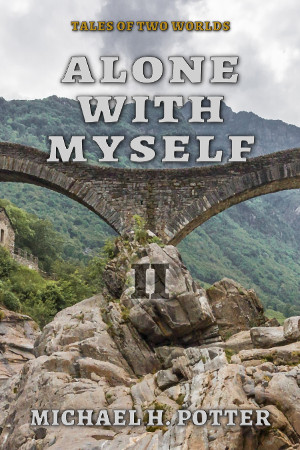
Release: Alone With Myself (Tales of Two Worlds 2)

The tales continue. Here’s the second of Tales of Two Worlds. Be warned, this one is the closest I’ve ever written to a “bad guy” point of view.

Another world. The other world. Pete Towson always knew aliens existed, but when he was presented with undeniable proof, with the chance to meet them in the flesh, he knew he had to take it, whatever the cost. Now, alone in an unfamiliar land, he must use all his skills, his intelligence, and his cunning. The first task is survival, but where will his road lead?

“Alone With Myself” is, like every story in the Otherworld series, currently exclusive to my Patreon. You can get it and the entire saga for a pledge of only a few dollars a month.

Next up is “Secrets Uncovered”, coming in May. I hope to see you then. For now, keep reading!

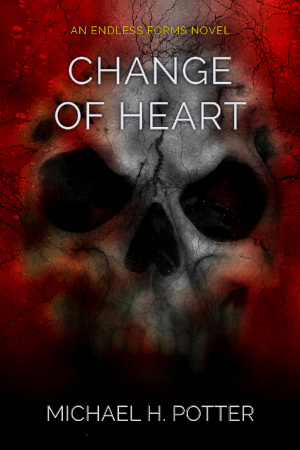
Amazon release: Change of Heart (Endless Forms 3)

I know I said Innocence Reborn was the next novel I’d release, but this one slipped in. Today, March 24, you can pick up Change of Heart, the third in my Endless Forms paranormal detective series, on Amazon in Kindle and paperback formats.

What is real, and what is within our minds?

Cam Weir has seen things no human being should ever look upon. Once, he was a skeptic, believing that monsters were nothing more than figments of the imagination. Hallucinations, certainly not reality. But now he knows the truth.

And the truth is only getting stranger, for this case doesn’t match those he has investigated. Details are different. Motives are unclear. Worst of all, the gruesome murder of an accountant will lead Cam to a frightening conclusion. Because this monster will strike too close to his heart.

The Kindle version is $3.49, while the paperback format costs a little more at $9.50, but it’s worth a few extra dollars to have the physical book in your hands, isn’t it? And if you want access to all my works, make sure to check out my Patreon, where you’ll find everything.

Although all my writing is currently on hold, I do plan more in the Endless Forms series. Pitch Shift is the 4th book, and it will come one of these days, I promise. So enjoy Change of Heart, and keep reading!

Panic attack

(Yes, this is the token coronavirus post. Everybody else is doing it, so you can’t blame me.)

I had a major anxiety attack over the weekend. Well, it actually started building as early as last Wednesday, only blossoming into full-on despair and nihilism Saturday evening. And that has nothing to do with being sick. As far as I know, I’m not infected. Even if I were, I doubt it would have that effect.

The truth is, I’m not afraid of catching this virus. No more than I would fear the flu or pneumonia or something similar, anyway. Yes, I worry about the possibility of infection, because I always do. I can’t afford to go to the hospital. I don’t have a primary care physician I can call on. So the prospect of suffering an untreated illness does, and should, concern me. That’s true whether the virus that caused it is the same seasonal flu strain that hit me in December or the (most likely man-made) SARS successor causing so much uproar around the world.

No, what triggered my anxiety to ludicrous levels a few days ago wasn’t the thought that I would get sick or even die. I’ve been through that one. Three months ago, while I lay in the bed, wracked alternately by aches or chills, I contemplated my own death, because I figured it was coming soon. My cousin died from the flu in 2014, at 35, so it wasn’t out of the realm of possibility. (And anecdotes may not be a substitute for data, but my very real experience with flu-related death is enough to make me feel that the current panic is overblown.)

What drove me to the brink of insanity was the thought that I would lose a loved one due to this. And the irrationality of depression provided two potential avenues for that to happen. The first is obvious: someone in my family contracting the virus. I have a lot of family members who are old, who continue to smoke despite my fervent pleas to quit, and who simply aren’t in the best state of health. I’ve lost one uncle already in 2020, and…I’m tired of funerals. Especially the kind around here.

The second conjecture was, to me, far more likely. As I have stated in the past, there is a woman out there whom I love very dearly. She’s likely reading this; if so, I hope she forgives this frank exposition of my mental state.

Unfortunately, she lives almost 100 miles away. I’ve been trying for months to…well, to get my act together, to find steady work, get a vehicle of my own, and so on. Every step of the way has been fraught with peril, it seems, as though all the forces in the world stood ready to stop me. I’m not a superstitious man by any means, but it’s almost enough to make me believe in curses, because the law of averages says I should’ve succeeded at something by now.

With the panic gripping the world, however, I felt my chances had finally run out for good, that I had lost my last opportunity to claim the life we both believe we deserve. If the whole world is locked down in quarantine, how am I to get to her? Who’s going to hire me when nobody is allowed to work? We’re both in our 30s, so I’m acutely aware of the biological clock factors at play, too. Four weeks—or four months, as some are claiming might be “necessary”—is time I don’t feel I have, time I can’t waste sitting around. Not if I want to achieve my ultimate goal of becoming a family man, of living a life worthy of the name.

All that came crashing down on me Wednesday and Thursday, and it hit hard. I tried writing on Thursday, and I just couldn’t find the will. My worlds are my escape, and I felt like there was no escape. Insomnia kept me awake, tossing and turning through each night, into each morning; what sleep I did get was light, troubled, not at all refreshing. On Friday, I made the mistake of pushing her away for the weekend. Some dark, disturbed part of me suggested I should do one better and break away for good. At least then I’d only be ruining one life, it argued. Saturday mostly involved lying in bed, listening to music, thinking, and trying not to cry in case the toilet paper scalping keeps going.

We talked on Sunday, and I vowed never to lose my mind like that again. I hope it’s a promise I can keep. For that matter, I hope I can keep all my promises to her. Especially the ones that lead to us living not just happily ever after, but together.

I’ve seen my life alone. It’s not pretty. It’s barely worth living, to put it bluntly. So now it’s time to fight. Fight the panic, fight the demons inside me, fight all those who stand in the way of the life, the love, I should have had all along. I know it’s not easy, but I’ve taken steps, following the mantra I have made my own, the opening lines of “Recreation Day” by Evergrey:

One step at a time.
Small progress seems futile,
but is as valuable as life.

Meet the family

Innocence Reborn is my newest novel, the first in the Orphans of the Stars sci-fi series, and it’s coming to Amazon in paperback and Kindle formats on June 9! Remember to check out the free prologue on my Patreon, and enjoy this look at the story’s characters.


The primary story of Orphans of the Stars as a whole, and particularly Innocence Reborn, centers on children. Some are fairly young, some are nearing adulthood, but all are underage. As the story progresses, they come to be one big family. Not always a happy family, thanks to the events of the novel, but they all know they’re stuck together, that their fates are intertwined. So let’s take a quick look at each of them.

Main characters

First up are the “main” characters, those whose perspectives we see. All told, of the 17 on the Innocence roster, ten of them get time on stage in the first novel, with a few others having their chance to shine later in the series.

  • Levi Maclin, age 15, is a space nut. Oldest of three children, he’s enamored with space, and he loves the idea of traveling through the starry void. Adding to that, he has those natural leadership qualities that make him take charge in a pinch. Levi can get stressed, and his decision-making abilities aren’t always the best, but he feels personally responsible for those placed in his care, in a way that, for example, a military captain wouldn’t.

  • Justin Maclin, age 11, is Levi’s younger brother. Your typical preteen, for the most part, Justin tries to play the tough guy. He’s not a bully by any means, but he does consider himself very masculine. He likes cars, space fighters, action movies, and things like that. Anything fast and furious, anything that explodes. He’s good at making friends, too, as long as they’re other boys.

  • Gabriel Cross, technically the oldest boy on the Innocence at age 16, doesn’t want to be a leader. He’s more of a thinker, a problem-solver. At home in Amarillo, he’s on the track team, which leaves him very put off by the idea of a place where you can’t run. So he sometimes complains about being in space, but when there’s work to be done, he’ll do it. Of the whole group, Gabriel’s also the most paternal and charitable, especially watching out for his siblings by birth, but ready to help anyone in need.

  • Hanna Laviola, also 16, earns the title of oldest overall by a few months over Gabriel. She’s a native and lifelong resident of Marshall Colony’s capital city of New Venezia, where she has a summer job wrangling the children of the elite visiting Outland Resort. But she likes that. She loves working with children, and her career plans revolve around daycares, preschools, and the like. Ending up in a situation where she has to become the counselor to sixteen scared kids, all while floating around in space, never crossed her mind.

  • Ed Tran, age 15, isn’t a prodigy. He doesn’t consider himself a genius, and he isn’t even sure he wants to follow in his father’s footsteps. But his father is a doctor who talked his way into a paid vacation at Outland Resort, ostensibly to study the effects of its environment on visitors. Ed comes along for the ride, because it’s summer, he’s out of school, and maybe he can make a few friends among the upper crust. And he has picked up some medical knowledge, which is a good thing to have on a ship full of kids.

  • Lucas Joshi is only 13 years old, but his future is already planned. He’ll inherit the family fortune, and what a fortune it is: stock options, cash, property, and probably even mineral rights for a lunar crater or two. His mother is the bigwig in the family, and she taught her son well, showing him the ins and outs of business firsthand. As the proverbial rich kid, he doesn’t like interacting with other children without a reason, which leads some to see him as shy and withdrawn. But behind that quiet exterior lurks a growing intellect and a corporate-trained ruthlessness.

  • Mika Harriman is 14, and she’s a colonial girl through and through. She loves her home on Marshall Colony, and she can even stand Outland Resort. After all, her mom works there, so it obviously helps the colony. In most respects, Mika’s a typical teenage girl, and that makes her hard to describe in broad strokes. She has an intelligence and an analytical brain, which has led her to find interest in STEM fields, but her emotions sometimes get the better of her. At her age, that can lead to fireworks.

  • Tori McConnell, despite being 11 years of age, would boldly claim to have spent a decade in space. She really hasn’t, though. It’s more like five summers, a couple of winter breaks, and the occasional jaunt to an orbital station. All of that came in the company of her uncle, Glenn; her parents died when she was very young, and he took her in, adopting her and bringing her with him whenever possible. Tori considers herself a space expert, a model crewman, and someone twice as old as she really is.

  • Nic Cross, also 11, is Gabriel’s little brother. He just started middle school in the year before his big brother won a vacation to the stars, and he’s loving it. Strong for his age—he’s already the star of his school’s wrestling team—and loyal to his friends, he knows he’s not cut out to be the captain of a spaceship. Instead, he’d rather find other ways to help. All he wants is the chance to be in control of his own life, just like any middle child.

  • Derry Glass, age 12, is shy, slight, and smart. Although she’s very often timid and untalkative, she can get a bit…intense. Especially when she finds something she likes. On top of that, she’s good at reading a situation, at seeing the possibilities. While she saw quite a few of the other children at Outland Resort while her father was working on upgrading its computer network, she barely said a word to any of them, instead spending her days reading, watching movies, learning about the world around her.

Supporting characters

Though the story of Innocence Reborn is told through the eyes of these ten adolescents (using the term very loosely in a couple of cases), they aren’t the only important characters. The other seven on the ship feature prominently. They’re always around, and some play big roles later in the series.

  • Malik Almadi, at 14, is on his way to into high school, and he dreams of being a pilot like his father. Lucky for him, the elder Almadi got assigned to the defense of Marshall Colony. So, while school’s out for the summer, he gets to watch some of the very boring patrol work that goes on in a system on the outskirts of human space. That’s enough to satisfy Malik, even as he dreams of a more exciting life.

  • Reza Vinter, 13 years old, belongs to a prestigious New England family. His brother Karim even has a job working for the State Department, giving him the opportunity for a vacation. A chance to make connections, except that Reza is an introvert in the extreme. Bookish, quiet, and altogether nerdy, he’d rather be anywhere than a resort, let alone one 70 light-years from home.

  • Alicia Cross, youngest of three at 10, looks up to her brothers Gabriel and Nic. But she’s also her own girl, with her own life. She likes to explore, loves being adored as the “baby” of the family, and lives in the moment in a way her siblings barely understand.

  • Rachel Shao is a mere 9 years old, and she’s lived with her grandparents in New Venezia since she was 4. They’re all she knows. Rachel hasn’t really had time to grow much as either a character or a person yet. She paid attention to all her grandmother’s traditional cooking lessons, but not all the math classes at school. And she sometimes has trouble making friends, mostly because she’s quick to cry when things go wrong.

  • Aron Alvarez, 10, is the last of the Marshall colonials. He’s a gamer, and another child of an Outland employee. But he’s never once been in space, and it shows. He gets sick. Even after he grows accustomed to a lack of gravity, he’s still not comfortable swimming through the air. Fortunately, two other boys about his age take him under their wing, but he’d just rather play games. He’s got a lot of them, and he sometimes feels like he’s the only one who knows how to keep them organized.

  • Sora Okada, another 9-year-old, doesn’t have much to show for those years. She’s a fairly average student, quick to startle or scare, hard to talk to. Just being on a new planet overwhelms her, and that’s before she ends up on a spaceship, separated from her family, with only a bunch of strange kids for company.

  • Holly Maclin, youngest of the lot at 7, is Levi’s little sister. It’s hard to talk about her without spoiling the novel, though. Here, I’ll just say that she’s fond of her brothers, and that she is young enough that wonder comes from more than space for her.

Celeste: my thoughts

I’ve never been a video game reviewer, and I’m certainly not going to start now, but I picked up Celeste this week, thanks to a Switch sale and my amazing Tetris prowess. I finished the main story portion of the game last night, so I’d like to offer my thoughts on what’s considered by some to be one of the top indie releases of the past few years. Bear with me, because this does connect to the rest of PPC. Eventually.

The gameplay

Celeste is a 2D pixel-art platformer where you’re expected to die. A lot. The difficulty is, in parts, brutal. Deaths are easy to come by, successes are rare and relieving, and the game pushed me to my limit in multiple spots.

You play as Madeline, a young woman who wants (for reasons we’re never truly told) to climb the fabled Celeste Mountain. Along the way, she has to solve a ton of jumping puzzles, most involving numerous spikes. You can jump, you can dash, and…that’s about it. Oh, and you can grab on to walls for a few seconds. No weapons, no enemies other than bosses at the end of each chapter, just you and whatever the mountain throws at you.

There’s nothing wrong with that. It’s fun, and it reminds me of a lot of retro games, just with better music. And while it is a hard game by any measure, it’s not a sadistically hard game like, say, Super Meat Boy or the Kaizo mods of Mario games. This is a challenging game most of all. As I’m not a platforming guru, Celeste tested me sorely. The game tracks your total deaths, and those rose fairly steadily with each chapter: about 50 for the first, climbing to 425 for the climactic “Summit” level.

Basically, the gist of it is this: if you want a challenging, yet rewarding, platformer, this one’s worth your time. But there’s also a story buried in there, and it’s that story which made me want to write.

The story

Madeline is troubled. She’s determined to climb this mountain, for whatever reason, and that’s laudable. I know I’ve doggedly pursued some questionable goals in my life. I’ve faced trials, and I’ve kept going through some tough times in pursuit of what I truly want. On the other hand, I know what it’s like to give up when the going gets too tough, too. So once the story of Celeste started developing from “I want to climb” into something more, I paid attention.

The mountain has magical powers, it seems. A kind of magic mirror in a ruined town near its base separates a part of Madeline’s personality, or psyche, or something. The character is literally called Part of You, and it’s kind of a palette-swapped version of our protagonist. Rather than the red hair and healthy skin of Madeline, her “dark” part is a purple-haired vampire.

This part is, as far as I can tell, supposed to represent her fears, misgivings, and so on. It’s always telling her that she should give up. Go home, because there’s no point in continuing. Okay, I’ve got one of those, too. Thing is, it’s called all of me.

In a talk with the stereotypical “bro” NPC Theo, Madeline talks about depression and anxiety, and I get that this is intended to be central to the plot, but…it just doesn’t work for me. As someone who really does suffer from both of those, the depiction rings so false that I was cringing at points. It’s not a mater of “Just try harder, and you’ll make it through.” That’s not how it works. No amount of platforming is going to solve the problem of the deck being stacked against you. “If you don’t stop, you won’t fail,” is the moral of the story, and…that’s not true. If it were, I’d have a job that pays enough to live on, not just the occasional freelance gig. I’d be living with my partner (and I’d call her my wife) instead of desperately scrambling to rearrange my life so I can meet her in person just one time before she finally gets tired of waiting.

In other words, the story of Celeste simplifies a complex, very personal topic in a manner that rubs me the wrong way. It’s good that games are trying to discuss such subjects, and I’m glad it doesn’t go too far into political rambling. (The worst sin here, in my opinion, would be the forced “diversity”: there are no white male characters at all, but that’s unfortunately the norm for the games industry these days.) And maybe its depiction of depression and anxiety work better for other people. I’m sure some do feel like they’re at the bottom of a dark ocean. But I don’t.

The verdict

As I stated above, I’m not a reviewer. This is, to my knowledge, only the second time I’ve gone into such detail about any media I’ve enjoyed. But maybe I’ll do it more from here on out.

Anyway, if I had to put a number on Celeste, I’d give it probably a 7 out of 10. I’d call it too hard for “casual” players, and the pixel art style might put some off. I like that style, however, so I find the aesthetic truly beautiful in places. The music is excellent, although a couple of the tracks are a little repetitive. And the story, although it isn’t front and center, has the problems I mentioned above.

Despite those flaws, it’s well worth the seven virtual dollars and six real hours I spent on it. Just don’t look to it for serious advice on overcoming your mental obstacles, and you’ll find a fun, challenging throwback to the days of yore.

End of all hope

I went to the optometrist yesterday. Yes, I’m aware that this makes for a very incongruous opening statement, given the title of this post, but there’s a point. I just have to get to it.

The last time I had a professional eye exam was…many years ago. I didn’t like the experience. Not only because I felt it left my vision worse than when I began (long story), but for the simple reason of vanity. This was the first time in a long time that someone in a position of knowledge told me just how imperfect I was. The first time my imperfection could be quantified. In truth, my back had been a problem for years by this point, my knees over a decade, yet there was something different this time. Those injuries and conditions weren’t a barrier to my future in the same way that vision problems are.

Thus, I never felt bad after a visit to the specialist regarding the three bulging discs in my lower back, but the same cannot be said of that eye test and what followed. It affected my mental state. The appointment was on a Friday, as I recall; I cried for most of the weekend.

This time, I was older, more mature, but those weren’t the big changes. Let me put it plainly: now, I have no vanity. Nor pride, nor self-esteem. The only reason I can stand to hear a doctor talk about “20/70” and “moderate astigmatism” and “amblyopia” is because…those words can’t hurt me any more than I’ve already hurt myself. I went in with no expectations other than to be humiliated. Anything else, then, was a small victory.

Maybe it’s the wrong way to look at things. I know I’ve been told so before. But…that’s the nature of the beast. Time and time again, my hopes have been dashed, so at some point I just stopped bothering with hope. I’ll assume I’m going to fail, if for no other reason than the simple fact that I haven’t truly tasted success in so long that I’ve forgotten what it’s like.

That’s not to say that I have no hope at all, despite the title. On the contrary, I have high hopes for everyone else. I wholeheartedly believe that good will triumph over evil (though my ideas of good and evil are far from the norm), and I hold the utmost faith in humanity, progress, and the future.

It’s only when I come into the picture that this innate pessimism rears its head. Tests in school, job interviews as an adult—I go in expecting to lose, not to win. Because it hurts too much the other way.

When the woman I love doesn’t talk to me for a couple of days, I figure I’ve done something wrong, and maybe she’s finally had enough of me. Why wouldn’t I? I screw up everything else I touch (outside of a computer, and even that’s not a given). At least I can feel elated when I get a simple text saying “Hi.” With my family, it’s a little different: I assume every conversation is going to become an argument or them ignoring me. And my health has become one of the worst cases. For a time, I truly believed I wouldn’t even be alive in 2020. Illness, depression, and the trauma of watching so many loved ones suffer made me feel my own end was approaching.

That last kind of thinking, fortunately, is a thing of the past. I still can’t believe I’ll have a long, happy, healthy life, though. At best, I count on getting two of those. And even that will be a struggle. Nothing good comes easy, not to me. All my bets are long shots, it sometimes seems. As someone who knows the odds, I can’t help but realize I’m not going to win it all.

But I don’t have to have it all. I don’t ask for much. Nothing more than what an average man has, anyway. Let me have stability in life, let me be loved, give me a place where I can be heard and heeded. I don’t need a billion dollars, a supermodel wife, and a TV deal.

Just something to hope for, that’s all.

css.php