Novel Month: End of an era

I’m not doing Nanowrimo this year. It pains me to say that, because it’s been a staple of November for over a quarter of my life. It was always something I looked forward to, something I eagerly anticipated before it happened, enjoyed while it was going on, and prided myself on completing. Not to mention the fact that my writing pushes resulted in some of my best work. Nocturne came out of Nanowrimo, for example.

This time around, I just can’t. When I wrapped up last year, I was in a very dark place. I couldn’t imagine taking the time to write another novel. Now that the time is upon us, I don’t have the time to take! My schedule is packed now. A full-time job, a full-time relationship, the imminent election and inevitable fallout, and the usual holiday rush have all conspired to make 50,000 words in a month impossible for me.

Even if I did want to try, though, so many of my books are incomplete that I feel starting something from scratch would do them a disservice. The fifth Orphans of the Stars novel still needs about 6 chapters. Otherworld #22 isn’t quite halfway done. I’ve left Endless Forms to languish for almost two years at this point, only a few chapters into its fourth book. I’d rather finish those first, and then work on Hidden Hills #3, Gateway #2, the Modern Minds shorts, or the Occupation Trilogy.

Yes, I still have a ton of ideas for stories, and a few of those are really great. It’s just the wrong time for them, unfortunately. It sucks, but…well, I won this thing ten years in a row. How many other authors can say that?

A little cleaning

For the first time in a long time, I’ve done some redecorating around PPC. You probably won’t notice many of the changes, but they’re there. Trust me.

First off, I now have an HTTPS version of the site. The “experts” say that every site on the web absolutely, positively must have an SSL certificate. I firmly disagree. I’d say that about 80% of sites have no use for it whatsoever. Yes, the increased security is a great thing. Encryption, especially encryption that is free from government and corporate backdoors, is a good thing. That said, the majority of sites out there neither have nor collect sensitive information, so…what’s the point? If you’re not logging in, if there isn’t even a form anywhere on the page, then why bother with the network and CPU overhead of HTTPS? It serves no purpose.

But Brave gets mad if you don’t have it, and the last good version of Waterfox is increasingly marginalized by larger sites. For those two reasons, I’ve had to do it. Yay for the future. Ugh.

And while we’re on the subject of dystopian futures (I promise this isn’t another rant against vaccine mandates), I’ve updated the version of WordPress that runs PPC. Okay, let me rephrase that. I updated PPC to use a better version of WordPress. It’s called ClassicPress, and it’s what WordPress should be.

See, I’ve used WP since this site’s inception in 2015, and I used it on the old potterpcs.net site starting all the way back in 2005. It’s not a bad platform, really. Problem is, the team behind it has completely given in to feature creep, as is so often the case in development.

The rot started a few years ago. When WordPress version 5.0 came out, it had a brand new editor: Gutenberg. This editor was to replace the “classic” one, a simple WYSIWYG or “rich” text box with a few formatting controls. Gutenberg is based around the concept of “blocks” as the basic page editing element, not something sane like, I don’t know, text.

Gutenberg was a buggy mess forced upon us, breaking not only workflows but any add-on designed to improve editing (like WP-Markdown, which I’m using here), and we users were told to suck it up and get used to it, because this is how things are going to be from now on. Oh, there’s a “Classic Editor” plugin, but it will be intentionally broken at the start of next year to prevent people from going back to the sensible method of editing text by editing text.

That annoyed me to no end, because it’s a theme I’ve seen repeated throughout the development world. Breaking things for no good reason and forcing your users to accept the brokenness as “the new way” is a time-honored tradition at this point. Look at Windows 10, Firefox 4, Firefox 24, Firefox 57, Firefox (Mobile) 71, Gnome 3, KDE 4, the entire concept of systemd…

I could go on, but I think you get the picture. Some people (and it’s usually designers, not the devs themselves) just can’t get it in their heads that we don’t like change for the sake of change. When something works, leave it alone. WordPress, like so many others, couldn’t do that. Never mind that they have a perfectly functioning editor, because all those “UX” people need something to do. So out came Gutenberg, in all its flawed glory.

I did my best to ignore it for 3 years. My hosting provider, Dreamhost, temporarily broke PPC in 2019, changing my “don’t touch this” setting to “automatically upgrade” without my approval. I had to contact support to rollback. Since then, I’ve stayed on version 4.9, the last without Gutenberg, and wondered what I’d do.

I’m also using WordPress for work, as the basis for a multi-tenant network. That project, since it’s for-profit, actually does need the latest and greatest. As it’s intended to be administered by people who don’t have my technical knowledge, it also has to be as idiot-proof as I can make it. Thus, I needed to find a way to allow only the most essential parts of Gutenberg, while also coding themes and plugins to take it into account.

While doing that earlier today, I found a reference to ClassicPress. Since I can’t do much work at the moment (long story), I read up on it and found that it is exactly what I’ve been looking for. Dreamhost might not offer it as a fancy prepackaged install, but who cares? This is WordPress as it used to be: a blog where you can get content onto the web as quickly as possible. No tracking down plugins to cut the bloat or digging through endless lists of blocks just to edit. Best of all, no breaking what’s already there.

Whether you can see it or not, then, PPC is no longer out of date. It’s running on the latest and greatest once again. That’s the beauty of open source software. If you screw it up badly enough, someone will care enough to fix your mistakes.

Summer Reading List Challenge 2021: Late start

In all the bustle of actually having a job, I completely lost track of time, and I forgot about the Summer Reading List Challenge!

Here are the rules again, for those curious:

  1. The goal is to read 3 books between the US holidays of Memorial Day (May 31) and Labor Day (September 6). Yes, that’s winter in the Southern Hemisphere. I can’t change that.

  2. A “book” is anything non-periodical, with very wide latitude. Comics, graphic novels, and manga are out. Just about anything else is in. And, thanks to the socializing I’ve gotten from having a job, I know to add something else to this: audiobooks count for the challenge if they would be considered books in written form.

  3. One of the books needs to be a genre outside your normal reading habits. Nonfiction, horror, whatever. Anything different, because one of the object of the challenge is to expand your reading horizons.

  4. Books you wrote don’t count. Even if you’re reading them for fun.

Now, because of my late start (which I can’t apologize enough for), you get a little extra time this year: the deadline is extended to September 17 if you haven’t already started something new since Memorial Day.

I’ll be posting my progress here and on the fediverse, where you can follow @mikey@mhp.singleuser.club. Have fun, have a great summer, and keep reading!

Writing updates for April 2021

I have updated The Big List to reflect a couple of minor progress notes. One, I’ve officially named Otherworld #19 as Forever Faithful. (I still don’t have a title for #20, and I have it on hold for numerous reasons. It’s looking more and more like Adventures in the Otherworld might not come out until 2023!)

Second, I’ve begun writing Pitch Shift, the fourth Endless Forms novel. How I’m going to juggle that and a job that can end up full-time, I have no idea, but never let it be said that I did things the easy way.

If you want something done right…

For my entire life, I have had to rely on others. And never have those others failed me more often than in our system of representative government. Whether in Chattanooga, Nashville, or Washington, the past two decades of adulthood have taught me that those who claim to rule in my name do not have my best interests at heart.

Like any good American, I’m ready to take matters into my own hands. Thus, it is with no small amount of trepidation that I say this:

I, Michael H. Potter, hereby declare my intent to seek the office of Representative for Tennessee’s 27th House District as an Independent in the 2022 General Election.

Democrats in this state’s offices are feckless, powerless. Republicans are willfully ignorant of the plight of the common Tennessean. I intend to stand for everyone in the 27th District, no matter their party affiliation (or lack thereof). No matter their race, sex, religion, ideology, or heritage.

If you live in Soddy-Daisy, I’ll represent you. If you live on Signal Mountain, I’ll represent you. Red Bank, Walden, Mowbray or Flat Top or Lookout Mountain, and anywhere in between: I’ll represent you. Because we are all Tennesseans. We are all Americans.


In the coming weeks, I will open my candidacy at MHP For Tennessee, and I will begin to grow my presence on alternative social media platforms that respect our rights as Americans.

For today, I would like to say that my platform is strictly defined by the Constitution of the United States and its associated amendments. To that end, my primary goals as your representative are as follows:

  • A statewide ban on all government-ordered mask and vaccine mandates related to COVID-19 or future minor pandemics, to be replaced by public education regarding infectious agents that is based on science rather than politics.

  • A requirement that any electronic voting machines used in Tennessee use open source software whose contents are available to the public, with independent security audits performed before and after any election.

  • A repeal of certain laws that disfavor local, in-state small businesses and cooperatives in favor of national or global corporations, such as the anti-municipal internet laws preventing all Tennesseans from benefiting from investment by local power companies.

  • The binding declaration of our great state as a sanctuary for the rights guaranteed by the First and Second Amendments, including freedom of speech, freedom of religion, the right to assemble peacefully, and the right to bear arms.

  • A focus on returning civics and critical thinking skills to our children’s education throughout the state, to combat the spread of harmful and anti-American doctrines such as Critical Race Theory.

  • The creation of public-private partnerships to emphasize skill-based training and hiring, thereby giving more Tennesseans entry or reentry into the workforce without the great expense of a college-level education in fields which have little need for it.

  • A continuous vigilance in pushing back against federal overreach, whether legislative or executive, by exercising our state’s powers of self-regulation under the Tenth Amendment.

HCW #2: Shot in the dark

Once again, I’ve posted an extended article over at Hardcore Worldbuilding, my Substack column. Or whatever you’re supposed to call them. The topic this time is guns. Specifically, I’m talking about guns and gunpowder weapons in fantasy. Considering how many stories I’ve written in that vein (Hidden Hills, some of the Otherworld episodes, the unfinished Shadows Before the Sun), it’s obvious where I stand on that argument.

Check it out, subscribe, and help me grow. Please. I’m begging you. I need validation!

Seriously, though, it’s one of my better articles, I think. On March 1, I’ll post #3, about the intersection of magic and education. From that point on, new posts will come on the 1st and 16th of each month. February’s short, so you got this one a day early.

Introducing Agena

I’ve been sick this past week. Sinus infections are always bad news, but this one has left me so out of sorts that I did something crazy. Okay, crazier than usual for me. Therefore, I give to you Agena.

What is it?

Agena is a server for the Gemini protocol, written in pure Python with no external dependencies. It supports static and dynamic routing, server-side scripting, virtual hosts, and wildcard SSL certificates while being light on resources and relatively easy to configure. It’s named after the Agena target vehicle, the unmanned rendezvous partner of the Gemini space missions, which was itself named after the star Agena, also known as Beta Centauri.

No, seriously, what is it?

Right. Let’s back up a step or two. First, Gemini. As you know, alt-tech is all the rage right now. If it isn’t where you live, it should be. Now that Google, Facebook, Twitter, and the other big players have shown themselves to be in opposition to basic human rights such as free speech and fair elections, while also exercising dictatorial control of their platforms by banning anyone whose ideology doesn’t perfectly align with that of the global elite, we need a change.

That change has already begun. Parler and Gab are two popular sites that have been attacked ruthlessly by Big Tech and the media for the crime of allowing free expression, while the superior alternative of the fediverse (note the link on this page) offers a truly decentralized option for social media.

But evading censorship isn’t the only reason to look at alt-tech. Some people like it because it’s new, because it’s a wide open space for experimentation, the way the internet was until it became overcommercialized in the last generation. (Wow. The internet has been around for generations now. I feel so old.)

Gemini, then, is one of a number of projects that aims to bring back some of the feel-good feel of old. Some of us still remember the glory days of Gopher, Usenet, and FTP sites, days when you didn’t need to download six megabytes of Javascript just to load a web page. Sure, those old platforms were limited, but that was by necessity; Gemini does it intentionally, replacing the HTTP protocol that underlies what we think of as the Web with a bare-bones alternative focused on content. There’s no CSS, client-side scripting, or even inline hyperlinks! In return, you get blazing speed and austere simplicity.

You get, in other words, something a decent programmer can write in a weekend.

The weekend project

Now, I’m not sure I’d be considered a decent programmer, but I did exactly that. To be fair, I needed a little longer, but that’s due to my own failings. I started on Wednesday, then slept. A lot. I haven’t been awake too much in the past few days, and most of my waking hours have been in the dead of night. The headaches and occasional dizziness make it hard to think straight sometimes.

Altogether, it took me about 8 hours of coding over 4 days to get a fully functional server. I could have finished it in a weekend, if I’d been physically capable. Sunday and Monday were for adding features: virtual hosts and server-side scripting, respectively.

No software project is ever complete. There are always bugs to be fixed, features to be added, and refactors to be, uh, refactored. Agena is no exception. I consider it beta quality (I’ve put it at version 0.4.2), and you probably shouldn’t use it for anything serious yet. That said, I’d like to keep working on it when I have the chance.

If you want to check it out, head to the Gitlab repo, where you can download a copy of the source, read the installation instructions, and all the usual Git goodness. It’s not often that I actually release something on the code side of things. It’s even rarer that it’s something I’m proud of.

But this is that time. I really feel a sense of accomplishment. Considering how down I’ve been the past few days, that’s saying something.

A new chance

Substack is all the rage right now, so I’ve decided to give it a shot. I’ll never stop posting my thoughts here at PPC, but I hope to use this as a way to get some of my “deeper” posts to a wider audience. I intend to post something there twice a month to start, assuming I can get my depression and anxiety under control. The content isn’t going to discuss any of that, though. This is all about writing and creating worlds.

So check out Hardcore Worldbuilding and subscribe. It’s free, because I’m a long way off from making it a paid deal. And tell your friends…but only if they like rambling. I’m good at that.

Paperback Release: Lair of the Wizards (Hidden Hills 1)

It’s been awhile, but I’m back with a new paperback release. This time, it’s Lair of the Wizards.

For ages, the wizards guided the people of Stada. They brought knowledge, advancement. They were the bearers of the future. But generations have lived since the last wizards left the land for parts unknown. Now war with a neighboring realm is bringing Stada to the brink, and the tribulations of battle reach even to the city of Karston. Here, the wizards may be gone, but not forgotten. Here, their knowledge lives on, their secrets have been preserved. The tales all tell that the wizards lived in the Hidden Hills north of town. Although they left, their home remains, and when an earthquake rattles Karston, it reveals the path leading to the lair of the wizards.

The setting is circa 1500, in terms of technology and society: after the Middle Ages, around the start of the Renaissance, and with the Scientific Revolution almost in sight. So it’s not exactly fantasy, but a lot of the elements are still there: a feudal society, belief in magic, a moderately heavy emphasis on religion, etc. Oh, and it’s teen-focused, much like Orphans of the Stars. That’s just how I roll.

This one’s massive. Seriously. It has 52 chapters. The paperback weighs in at 660 pages. The manuscript itself hit 233,000 words. It’s my largest release to date, and the third-longest book I’ve ever written. (The longest is the sequel, Rise of the Wizards, which isn’t quite ready for release yet. And I promised myself I wouldn’t bring Heirs of Divinity into this discussion. Oops.) But that extra size gives me a lot more freedom. I can ramble, as I tend to do. I can build up more slowly, take a little time for digression. In other series, I sometimes feel rushed. Not so here.

I’ll be honest. I didn’t intend it that way from the start. Indeed, Lair was originally conceived as a series of short stories! By the time I’d finished four chapters, I realized that wasn’t going to happen, and I switched gears, turning it into the epic it became. Then, I started making plans to turn it into a novel series. I’ve got four in total: Lair, Rise, and the unwritten sequels Return of the Wizards and Legacy of the Wizards.


Before I give you the links to Amazon and Patreon, I want to talk a little more. First, the writing process, because this one took a long time. I started writing in 2015, finished the draft in 2017, and took three more years to edit it into the masterpiece I released today. In a way, it has covered my entire writing “career” up to this point. It grew. Vastly.

So did I. At the start, I didn’t have much of an idea where I was taking it. I’d written the first Otherworld novel (plus two and a half that I threw away), Heirs, Before I Wake, and a couple of short stories.

And then I had an idea. What if a few teens in a medieval-style fantasy world found evidence of modern-era technology? It would be, in a way, the converse of Otherworld. On top of that, I would be able to write something closer to “traditional” fantasy in terms of setting. Well, except for the fact that I find traditional fantasy settings boring. I actually like the post-medieval era more. One author (I can’t remember if it was Martin or Jordan or who) once said that the invention of gunpowder is the end of fantasy. I disagree, and I’m willing to prove it. The Hidden Hills series has early guns, and most of my fantasy-like settings are similar. (Occupation is closer to Victorian than medieval, and even Otherworld has early cannons now!)

Worldbuilding on this one was very, very sparse. I have no map of Stada, not even an outline. I didn’t make out demographics tables for Karston. Where I did take it into account, I made sure to go into detail, but this series is more focused on characters and plot than setting, so I cheated a bit to start. Since then, I’ve expanded in a lot of areas, such as the polytheistic religion of Stada or the geography of the wider world it inhabits. But the main focus continues to be the interaction of pre-modern characters and near-future technology.

As for the name of the series, that one came to me early, and it’s dear to my heart. When I first started writing, I imagined a town near a line of large hills or small mountains, much like where I live. Some of those hills would have their own history, as told by the people dwelling beside them. One pair, actually connected in the middle, gained a bit of a reputation for being haunted.

I live on such a hill. No joke. Wikipedia has two pages for my town: one for the town itself, another for the street my house is on. And that’s the longer one, because not one, but two ghosts have been sighted on this street. One dates back to the Civil War, the other to 1775. (For the record, I don’t believe in ghosts, but I’ve heard some awfully suspicious sounds over the last 18 years.)

The idea of a local legend about a haunted hill was just natural. It also made the perfect excuse to hide a secret underground bunker. But people couldn’t live there forever, right? They’d go crazy cooped up like that, a fact I recognized long before lockdowns were a thing. So they would have to come out eventually, and they would gain a reputation among the more mundane inhabitants of the town. Their technology, their secrecy, and their otherworldliness would set them apart.

From there, connecting the dots was pretty simple. The outsiders had to be wizards, right? And there’s the fantasy angle, even if there’s no “real” magic going around. Starting the story with an earthquake? A little hacky, but it let me hit the ground running, while also giving a reason for what was hidden to become somewhat less so.

But I still needed a name for the “haunted” hills, and this is where my family history comes in. Before I was born, my parents lived in the Hidden Hills trailer park. (Note, not a mobile home park. This was Tennessee in 1982. They were called trailers, even if they stood still.) Later on, my aunt lived there, too. In 2015, when I started writing Lair, my stepdad’s brother, who had been living over our garage until his COPD got too bad, moved into the very same place. In fact, the very same lot where I may have been conceived 33 years earlier. It was on my mind, and it just felt right.

I’m always looking for ways to give shout-outs to the ones I love. Lee’s son in Otherworld gets a native name I can shorten to Tommy so he can be named after my stepdad’s other brother, who passed away while I was writing A Bridge Between Worlds, as well as my grandfather. Ian’s boss in The Soulstone Sorcerer is an obese man named Joseph, in honor of my deceased cousin. Cam’s friend in Endless Forms is named Katherine Key for my aunt Kathy, whose initials are KEY. His favorite streamer is my brother. And the fourth book, once I get to writing it, is going to be based in Nashville for two reasons. One, my late uncle, who made a career there in music (and other things I can’t talk about) and always wanted to go back. Two, it’s much nearer to the woman I love, and putting her in a book looking like the only way I’ll ever get to be close to her.

For Lair, then, I went with the hills that were the most influential on my life. Not Signal Mountain, Lookout Mountain, or Walden’s Ridge. Nope. This series and its centerpiece location are named after a trailer park. Why? Because family means something. Especially these days, when you can’t count on anyone else.


So that’s the story behind the story. Now you can get to reading the actual novel. Make time, though. As I said before, it’s huge, and it’s priced accordingly. Over at Amazon, you can pick up the Kindle version for $5.99, while the paperback is $19.99. (Overpriced, I know, but it’s the only way I make any reasonable profit.) If you’d rather support me on a recurring basis, head over to my Patreon, where you can get Lair and a ton of other books in DRM-free EPUB format, starting at $1/month.

And, as always, keep reading!

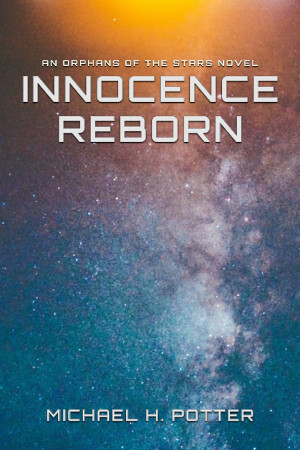
Release: Innocence Reborn (Orphans of the Stars 1)

The time has finally come. Innocence Reborn, the first novel in my Orphans of the Stars YA space adventure series, is now available on Amazon KDP and in paperback!

Space is a frontier. Space is an adventure.

Levi Maclin was always interested in the vastness of space. He dreamed of sailing through the void, exploring new worlds, seeing alien suns. This summer, he hoped to have his chance. Instead of going to beach for their vacation, his family would travel across light-years to Outland Resort, humanity’s most distant colony, its farthest frontier. It was a getaway, an adventure, a dream come true…until it wasn’t.

Some vacations are ruined by hurricanes, others by blizzards, but Levi’s falls apart when a series of unidentified objects streak across the sky above Outland Resort. They aren’t meteors. They aren’t comets. They’re weapons, weapons trained on the resort and its whole world. Suddenly, his adventure takes an unexpected turn. As concern turns to panic, he can only think one thought: how did it all go so wrong?

Told through the eyes of Levi, his brother, and a number of other children and teens they meet along the way, this series is my attempt at making space acessible and fun in a way rarely seen today. Readers of all ages will find something to like about this one, I believe. The characters are young, thrust into an unpredictable and volatile situation that requires them to grow up fast, but they retain their youthful vigor and mindset throughout. While the science isn’t 100% rigorous (there’s FTL travel, for example), it’s far more than mere handwaving. There’s action, drama, adversity and triumph.

And there’s space. Lots and lots of it. Orphans of the Stars has space travel. It has ships, colonies, asteroid mining, domed cities, pirates, combat, and much, much more. Check it out on my Patreon in the Casual Reader tier or on Amazon for $3.99 (Kindle) / $11.99 (paperback), and remember to keep reading!